

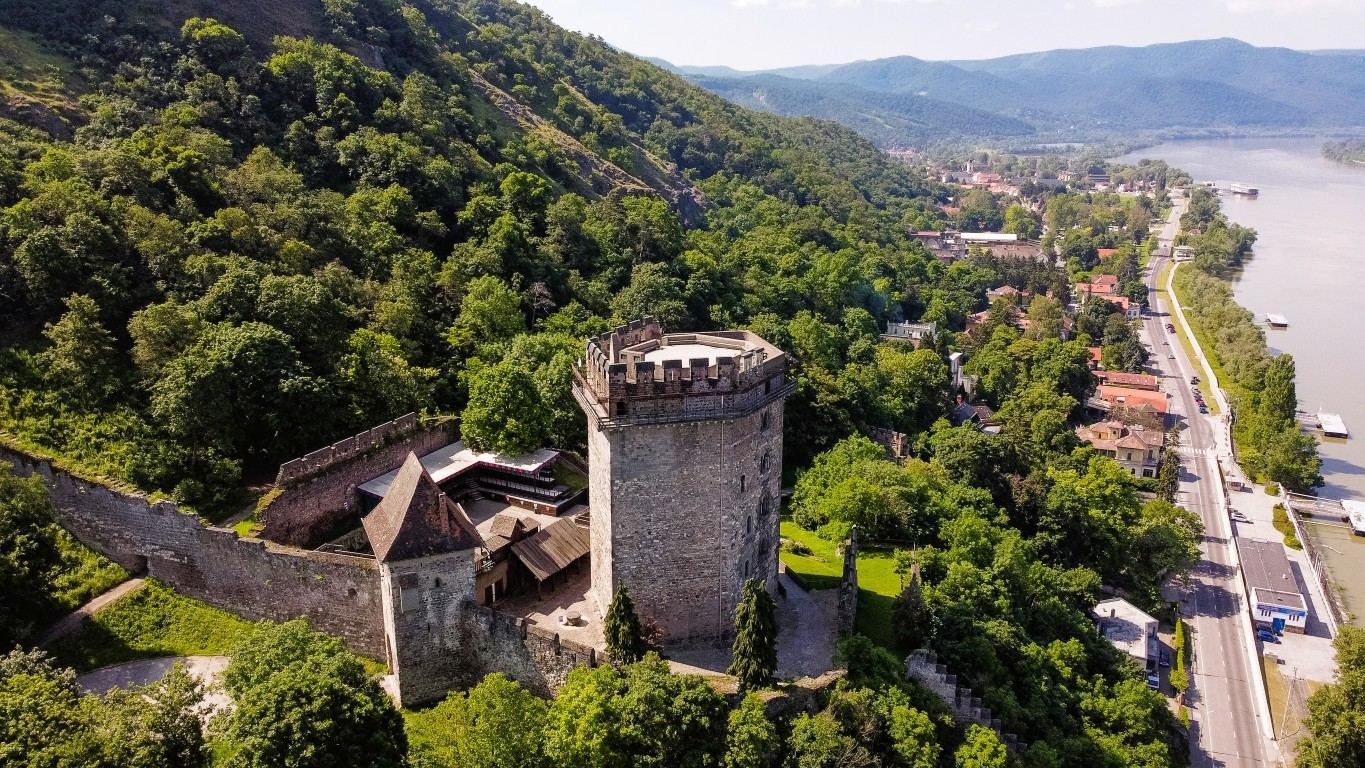
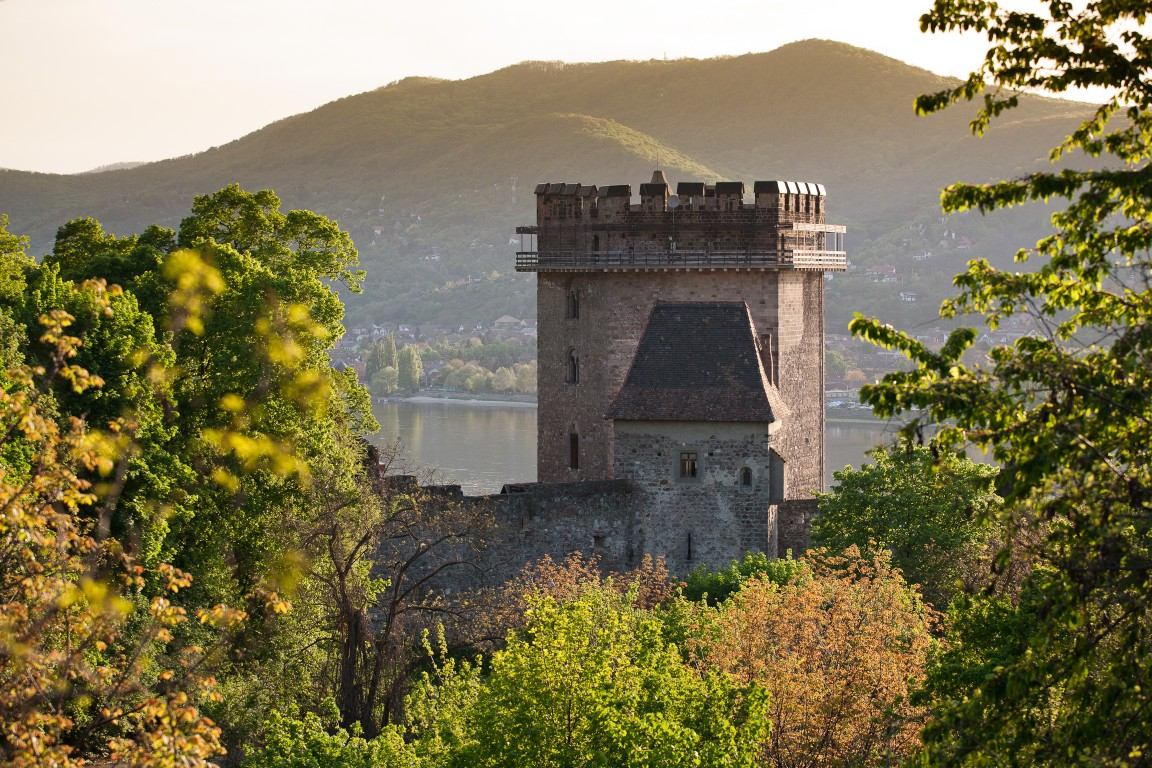
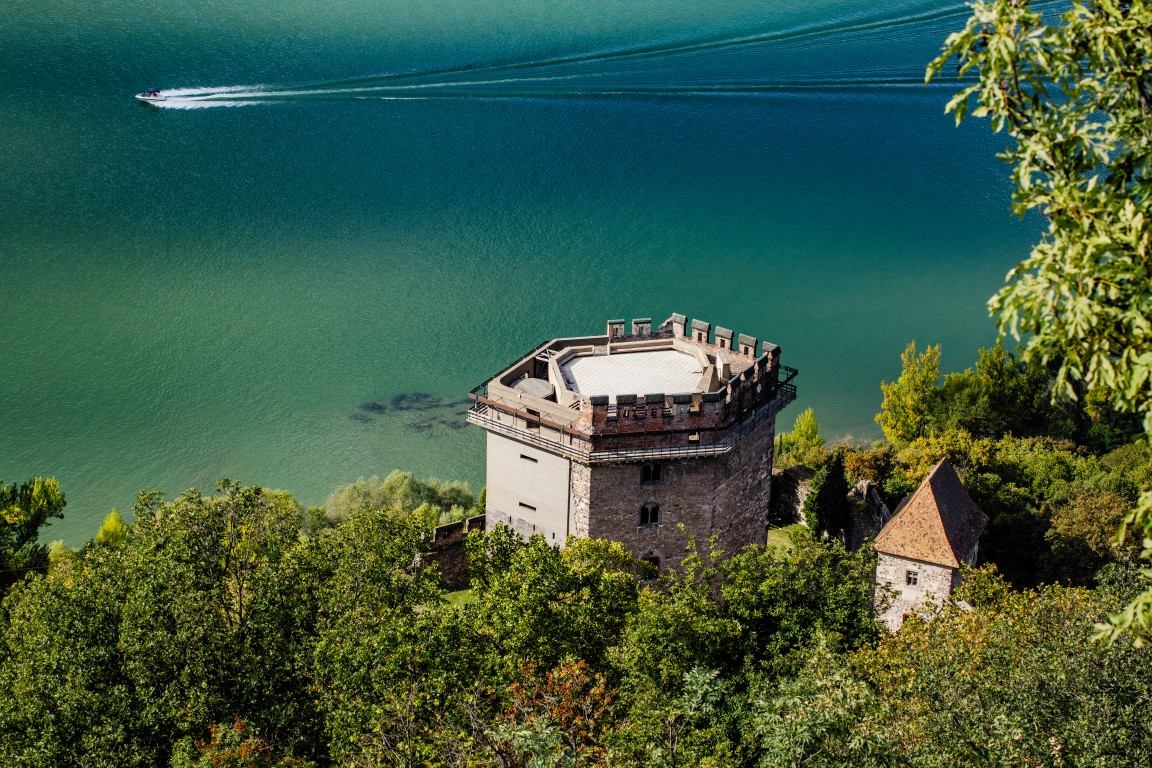
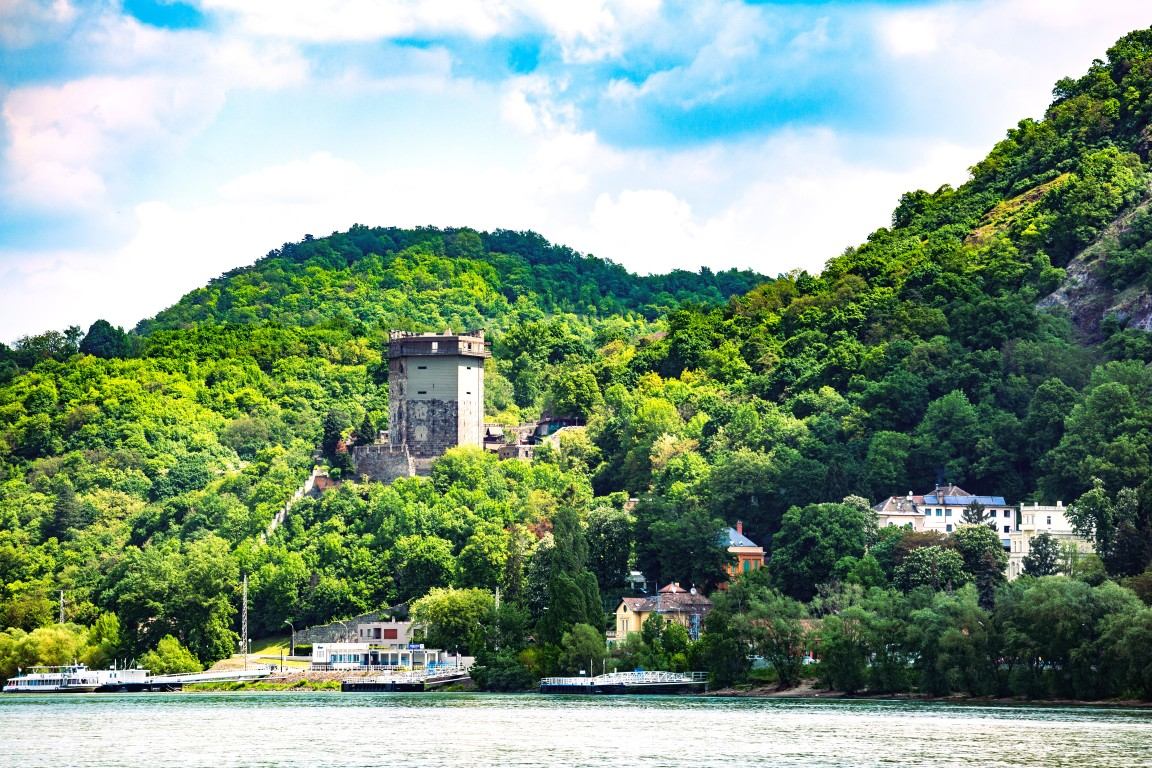
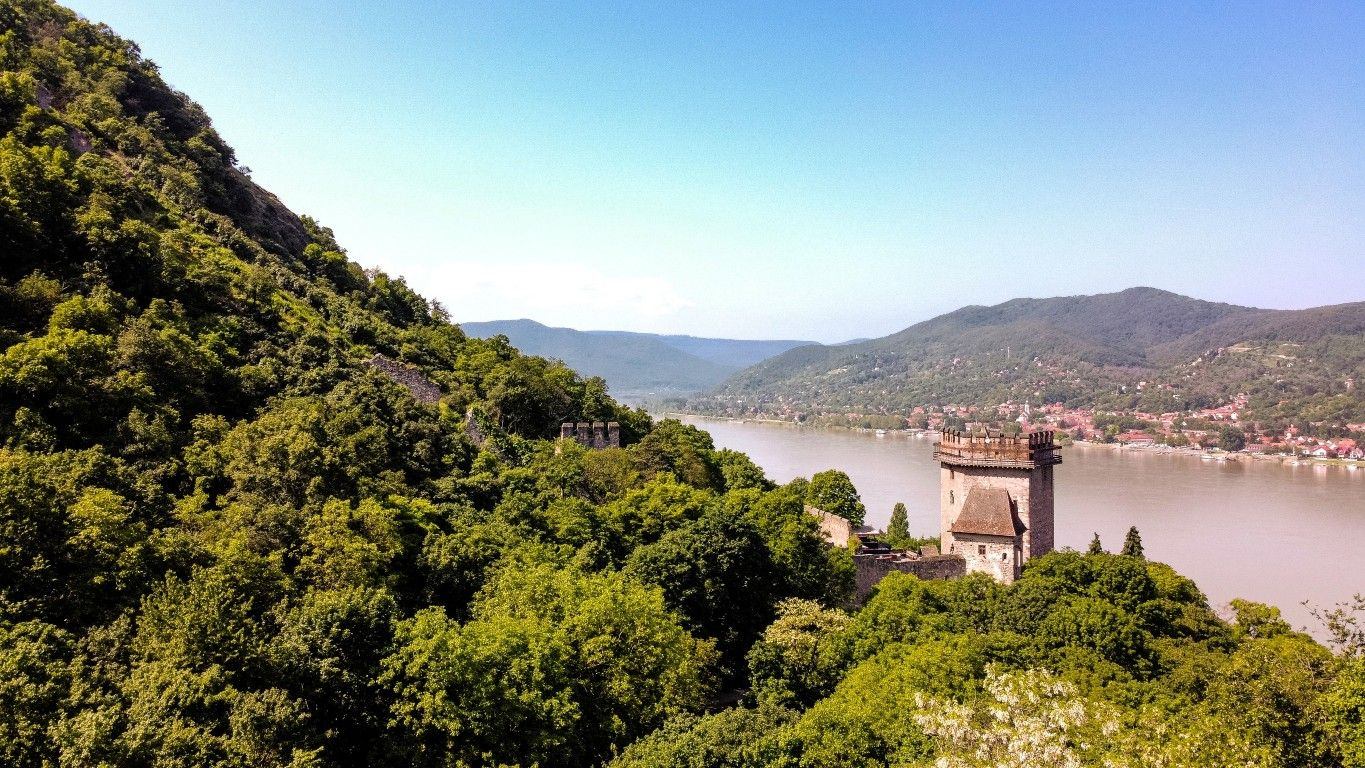

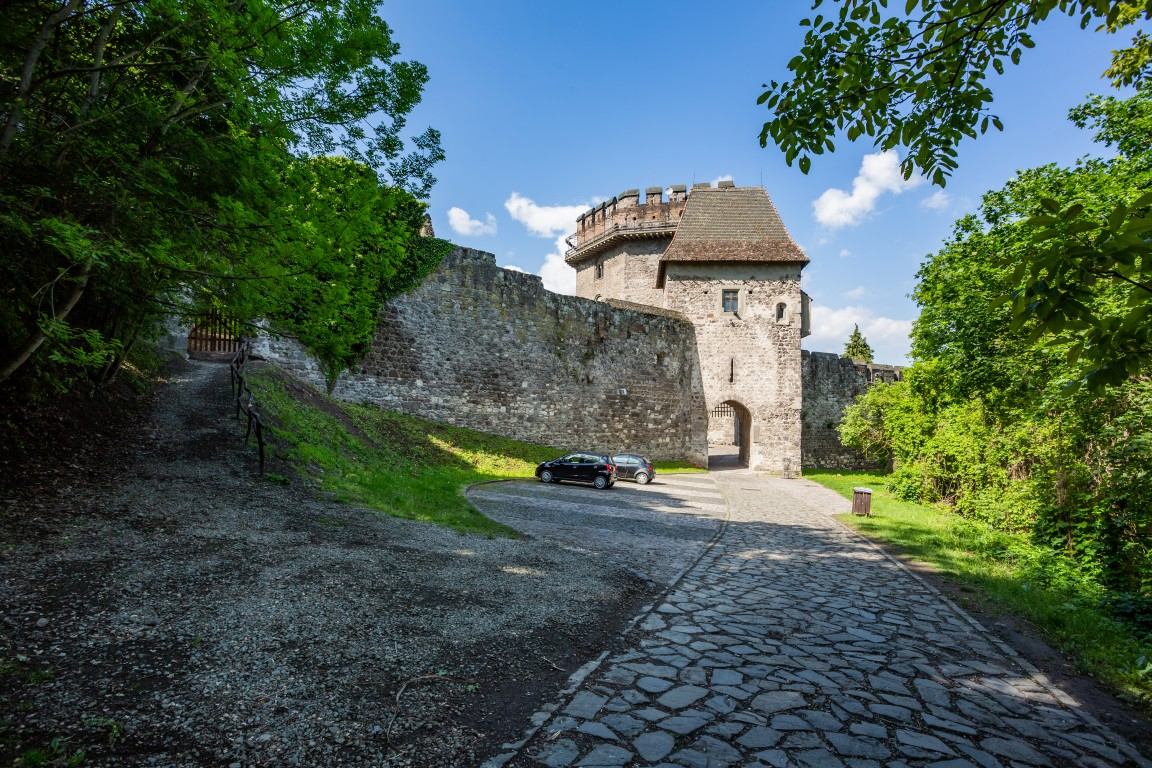
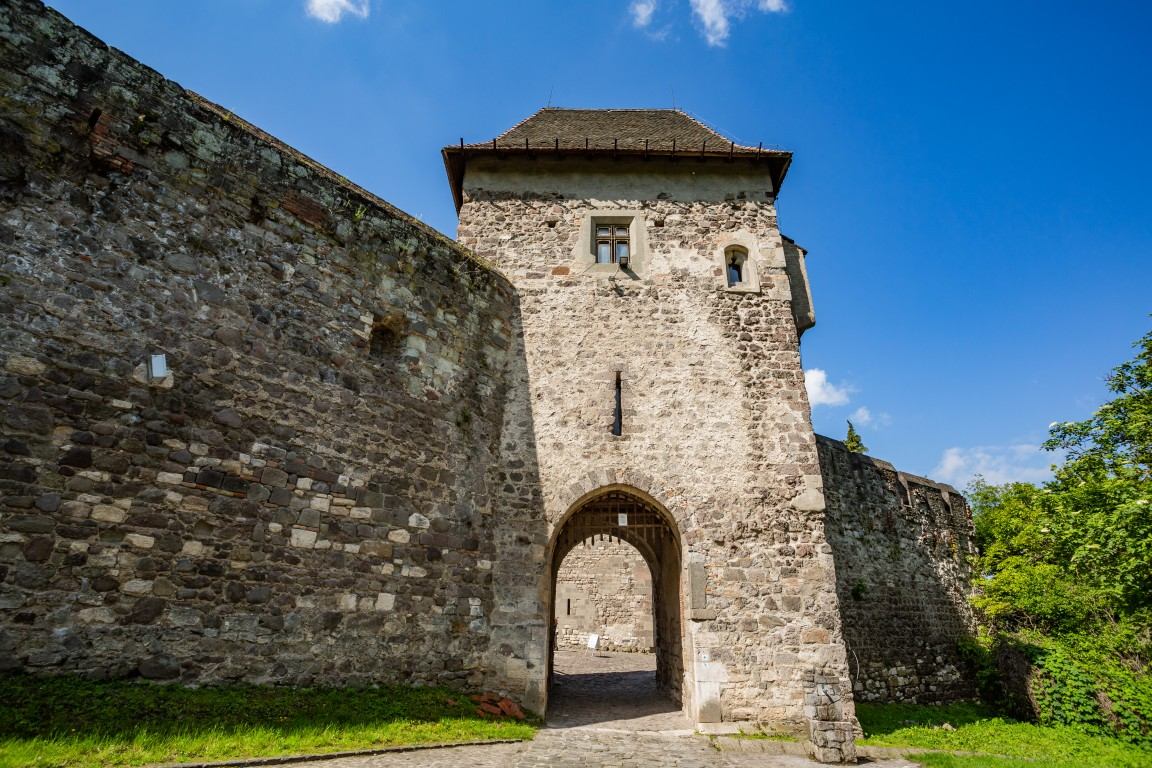
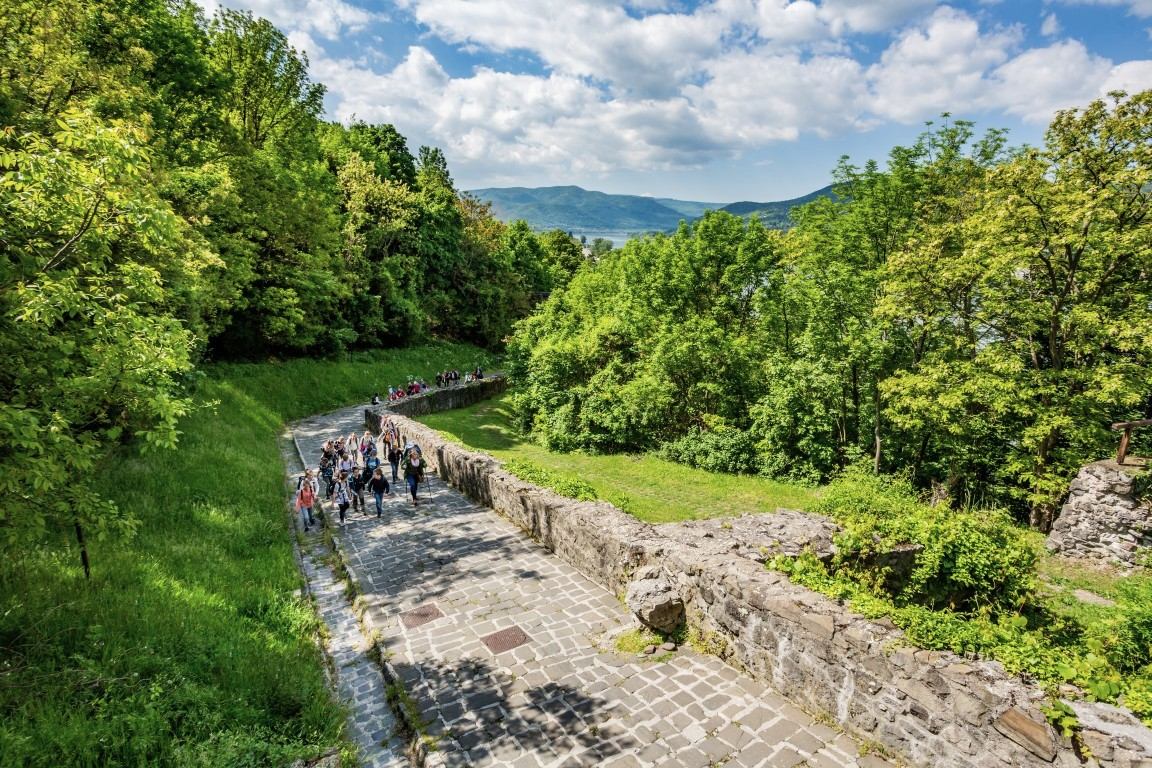
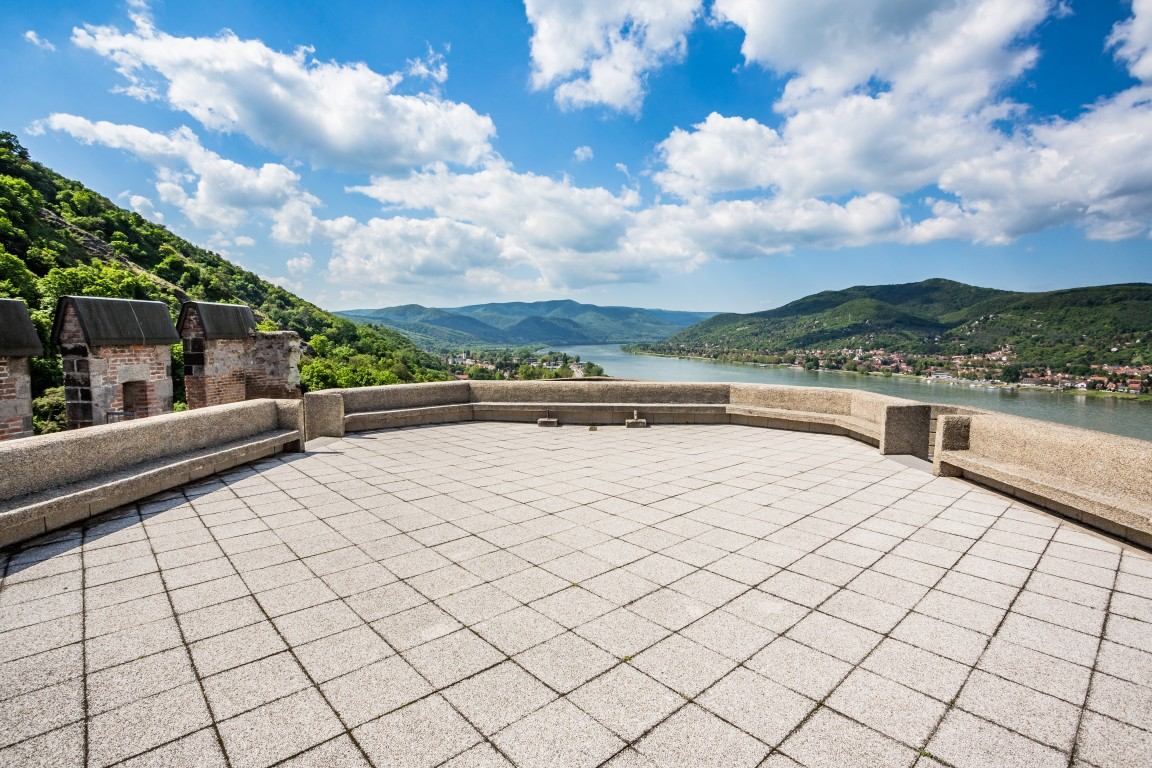
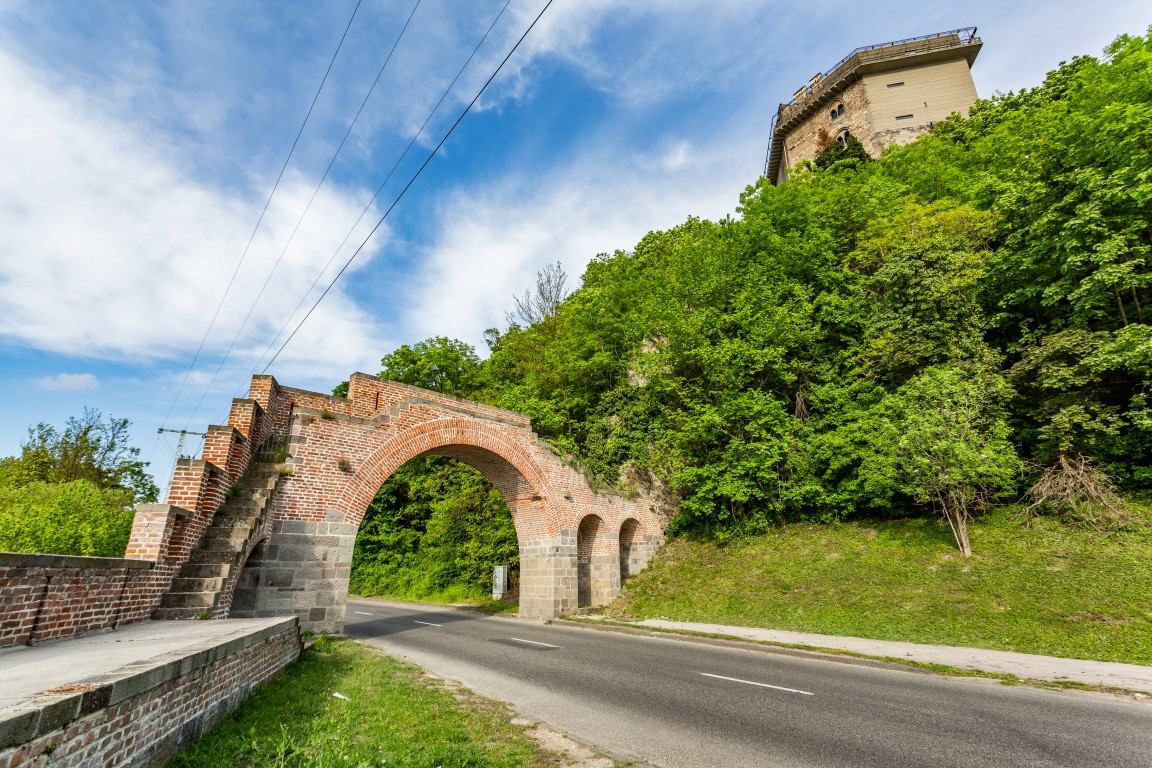
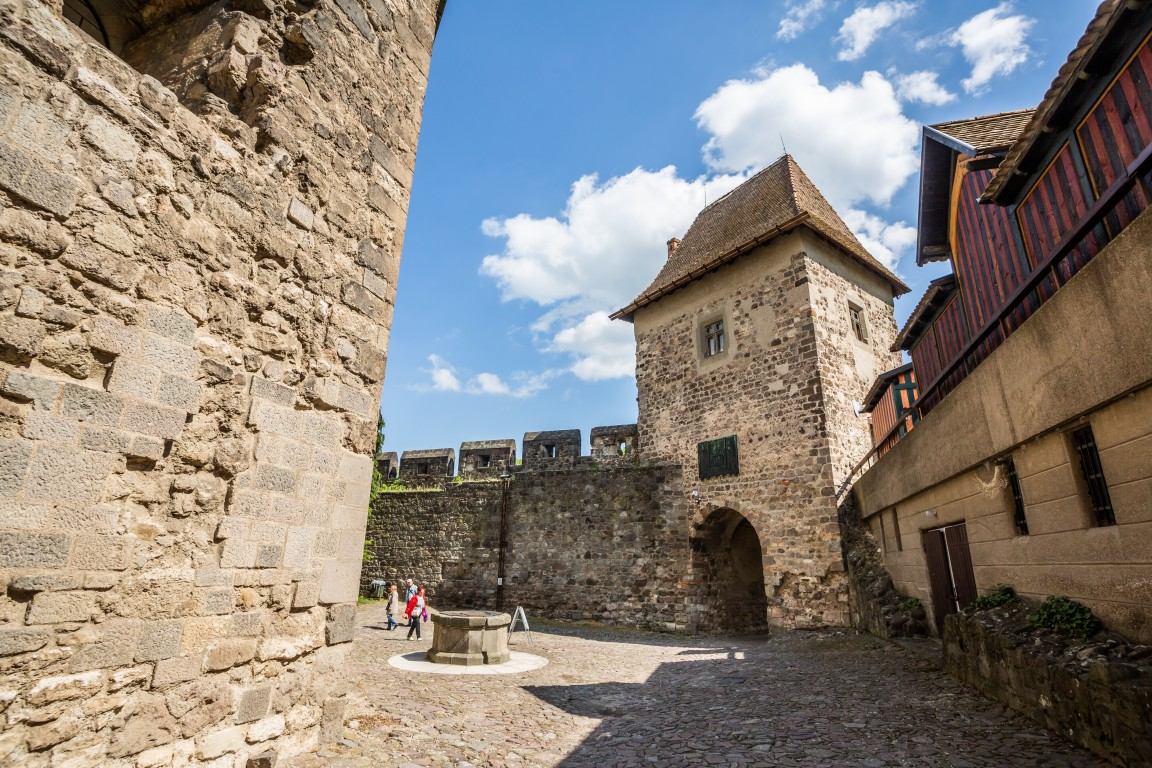
Like the Citadel, Solomon's Tower, with its breathtaking scenery (backed by the Danube), is still the venue for many wedding ceremonies, and the adjacent gymnastics field is regularly used for medieval jousting demonstrations by the military tradition of the Order of St George.
From spring to autumn, the Solomon Tower is one of Visegrád's most active attractions, where you can see a jousting tournament or a drum procession almost any day of the week.
The biggest mystery of the Solomon Tower, one of the symbols of Visegrad, is its common, misleading name. King Solomon could in no way have been imprisoned in the tower of the Citadel (which today, in keeping with tradition, we also call Solomon's Tower), since Solomon was a prisoner of King Laszlo in Visegrád in the 11th century, but the first official document from the reign of King Béla IV only records the completion of the double castle system in 1256.
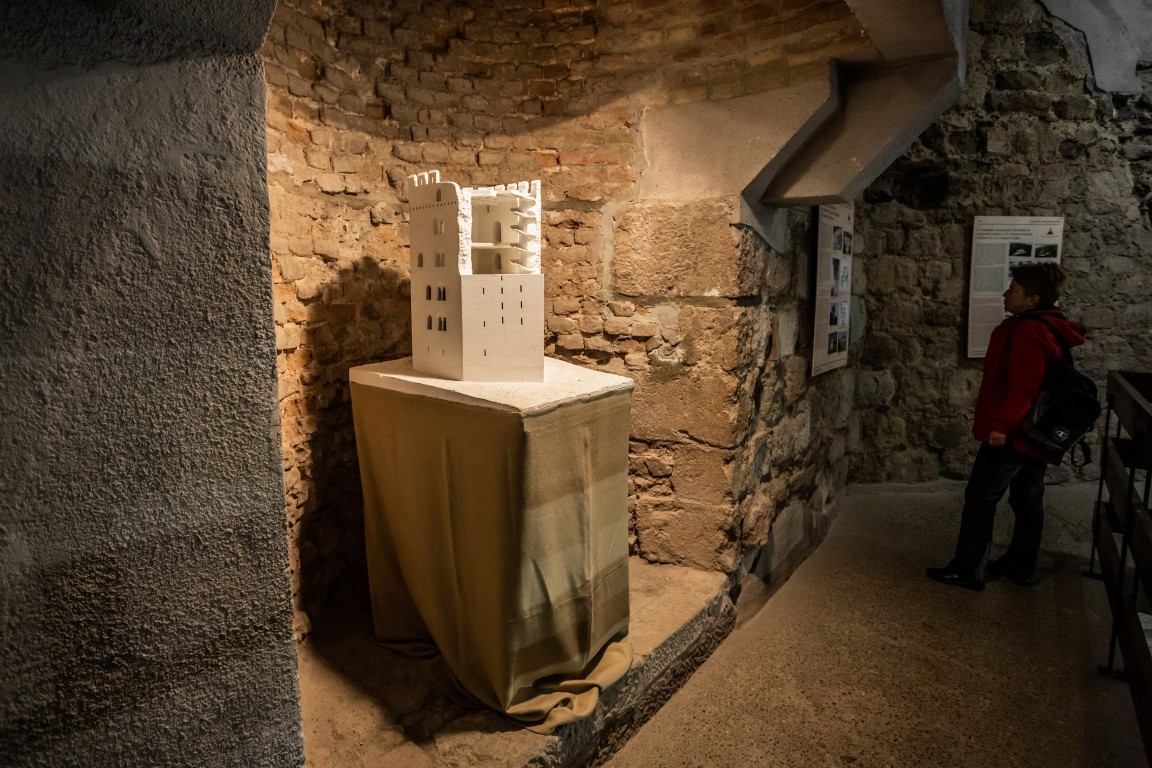
So we are „right” if the castle part, built in the middle of the 13th century, at the same time as the Citadel, was an integral part of it. Visegrad lower castle, or residential tower we call it.
The Visegrád Lower Castle, which was continuously modernised by all Hungarian rulers from Béla IV to King Matthias, had three main functions: it was a military fortress, an ispanic residence and a royal residence. It was also a fortress, a seat of military power and a seat of the capital, and a seat of the capital, a military residence and a seat of the capital.
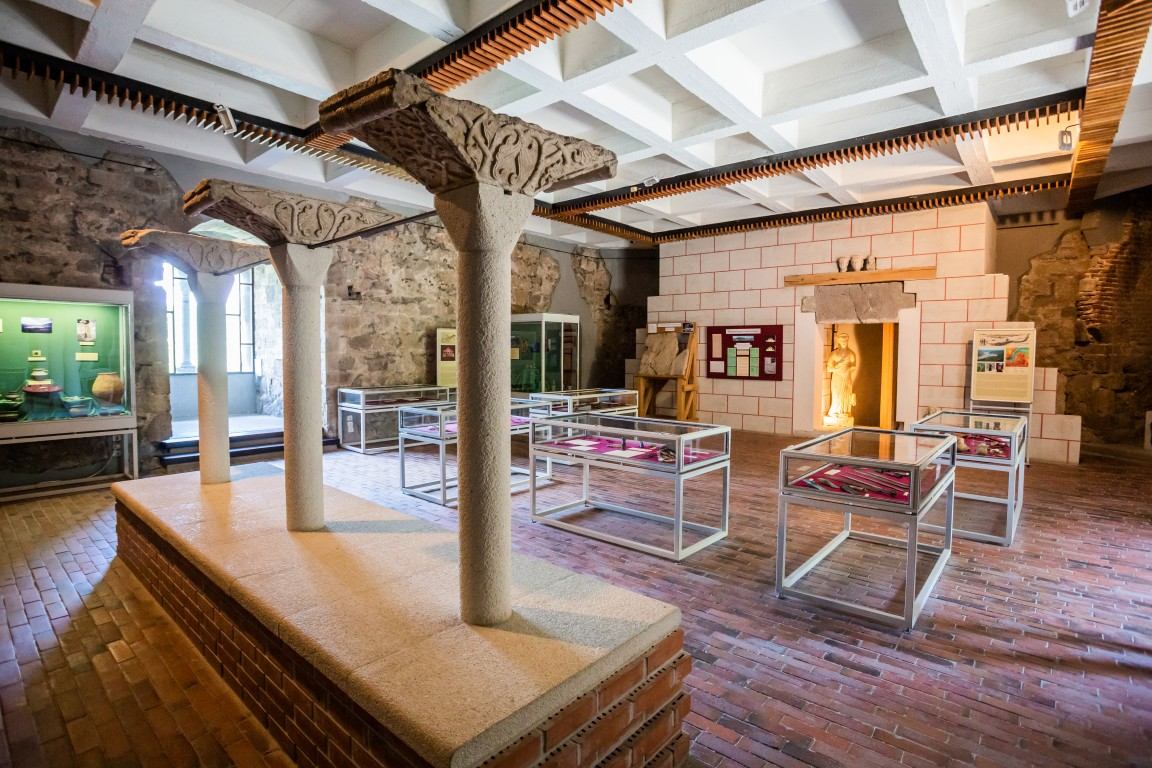
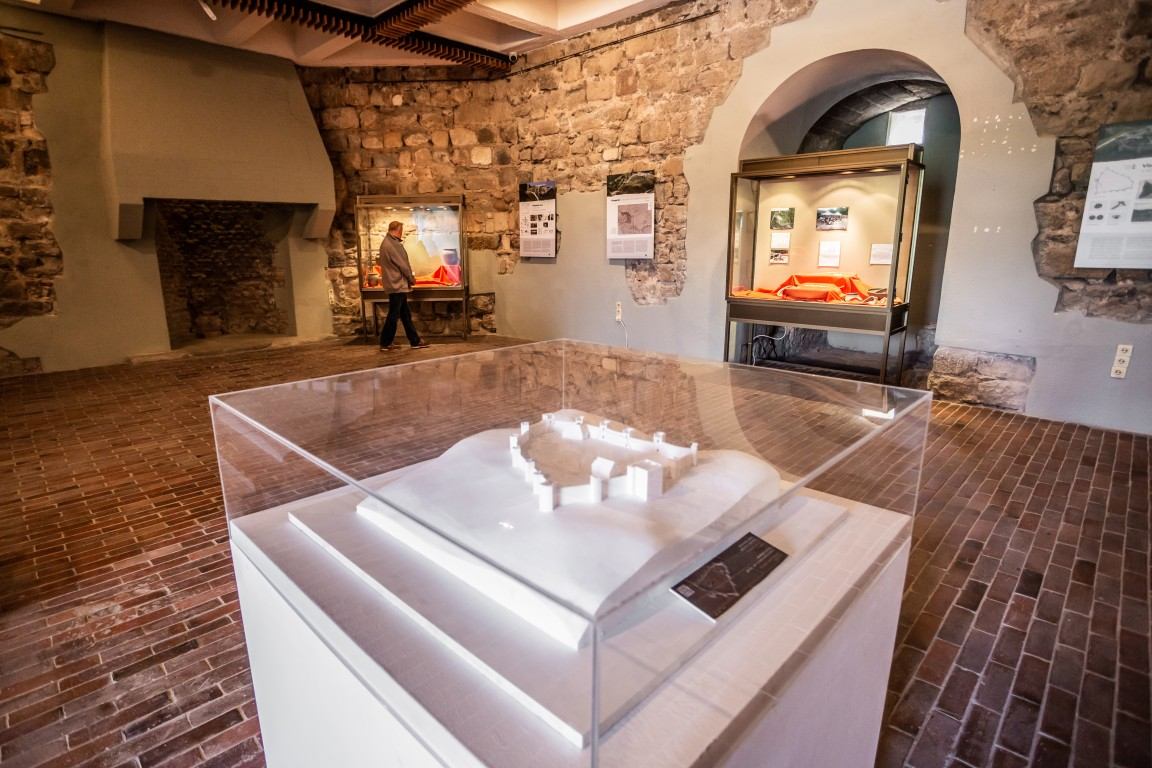
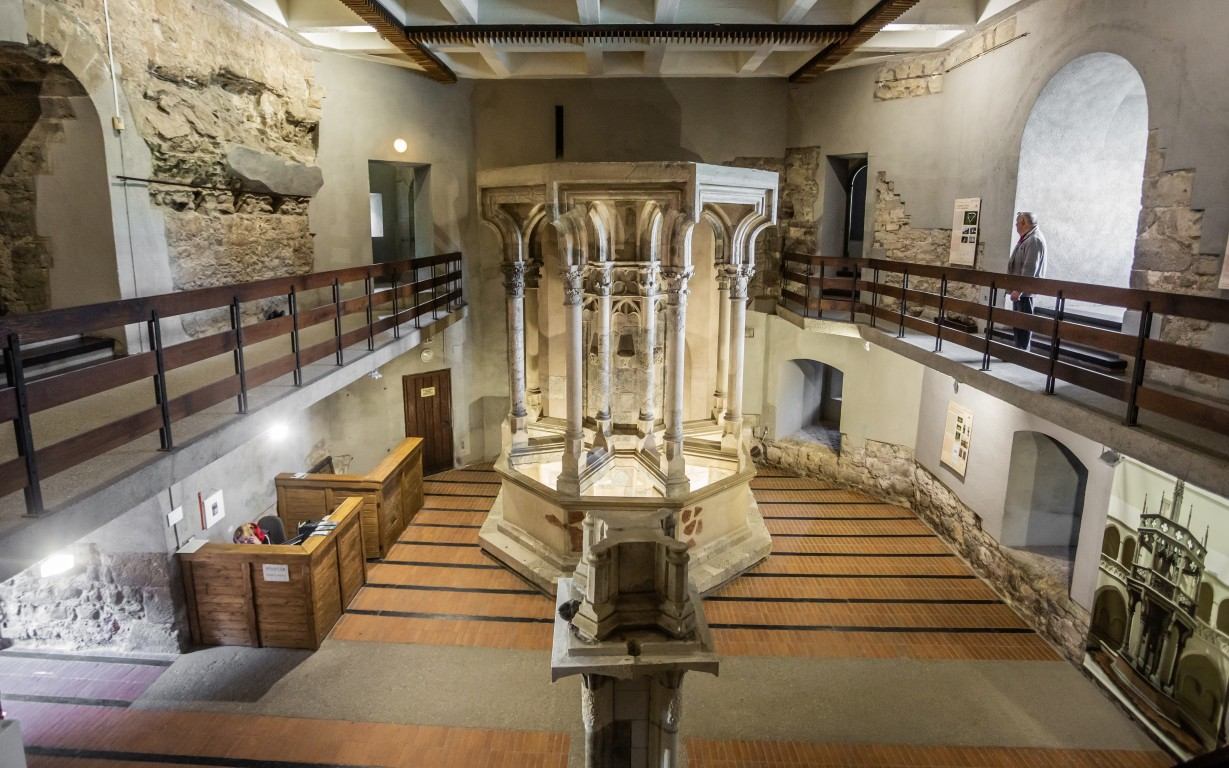
Permanent exhibitions in the Solomon Tower:
- The 14th century ornamental fountain of the Royal Palace of Visegrád
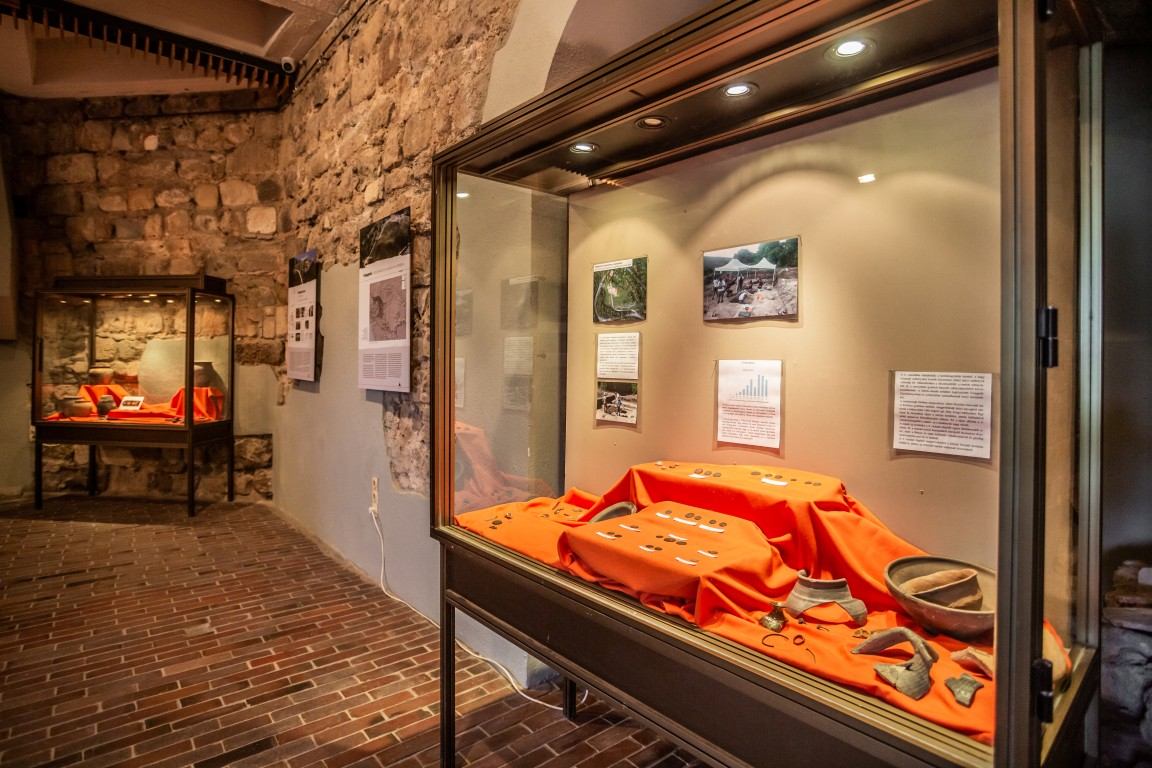
- The history of Visegrad from prehistoric times to the 20th century
Opening hours
2026. április 29 – augusztus 31.
Monday-Friday: CLOSED (except on public holidays)
Wednesday-Sunday: 09:00 - 17:00
2026. szeptember 1 – 2027. április 30.: ZÁRVA*
* a lovagi tornák időpontjaiban látogatható a Salamon-torony!
Entrance fees
Adult: 1.100 Ft
Discounted: 550 HUF (6-26 years, 62-70 years, accompanied by at least two close relatives under 18 years (maximum 2 persons)
Free: under 6 years and over 70 years
On 20 August, to mark the national holiday, admission to the exhibitions at the Salamon Tower is free for everyone. Admission is free for families on the third Saturday of every month.
Shining like Solomon's pumpkin - How is it?
Hungarian history is full of legends, which in the minds of people of later times often come back as facts, and the power of a document to prove them is not given much more space than legends and stories such as King Matthias often travelled the country in disguise. The evidence for the former is there in the archives, but the latter, even if its basis in reality cannot be excluded, is nothing more than a tradition of narratives and tales built on each other over the centuries, merging with the recollection of a bygone, glorious age. Solomon's pumpkin this is also the case.
During the internal strife for the crown, when Géza and László, nephews of King Andrew I, fought for the throne with the king's son Solomon, and finally defeated him at the Battle of Mogyorod (1074), Solomon was later captured despite the peace treaty.
In Visegrád at that time, only one building could have served as a prison for the high Solomon, namely the Ispan Castle, built on Roman foundations during the reign of St Stephen (the present-day Sibrik-domb the ruins of which bear witness to these times).
„So Solomon could certainly not have been imprisoned in today's Solomon's Tower. „
According to one of the most popular legends, during Solomon's imprisonment, the windows of the castle (the former Ispan castle) were lit up with lanterns in the evenings for security reasons.The light of the lanterns, which could be seen from far away, was a great help and landmark for the Danube sailors, and the saying „shines like Solomon's gourd” originated from the sailors.
The truth will probably never come out...
Did you know?
The walls of the 31-metre-high Solomon's Tower are up to 8 metres thick in several places, making it impossible to heat the building efficiently, even though it once had huge tiled stoves in all its rooms.
In the period, the conditions of residential buildings such as Solomon's Tower made gout almost an inherent part of high courtly office. Today, thankfully, the only memory of all this is the soothing coolness that blesses us on hot summer days when we enter the tower's huge gates.