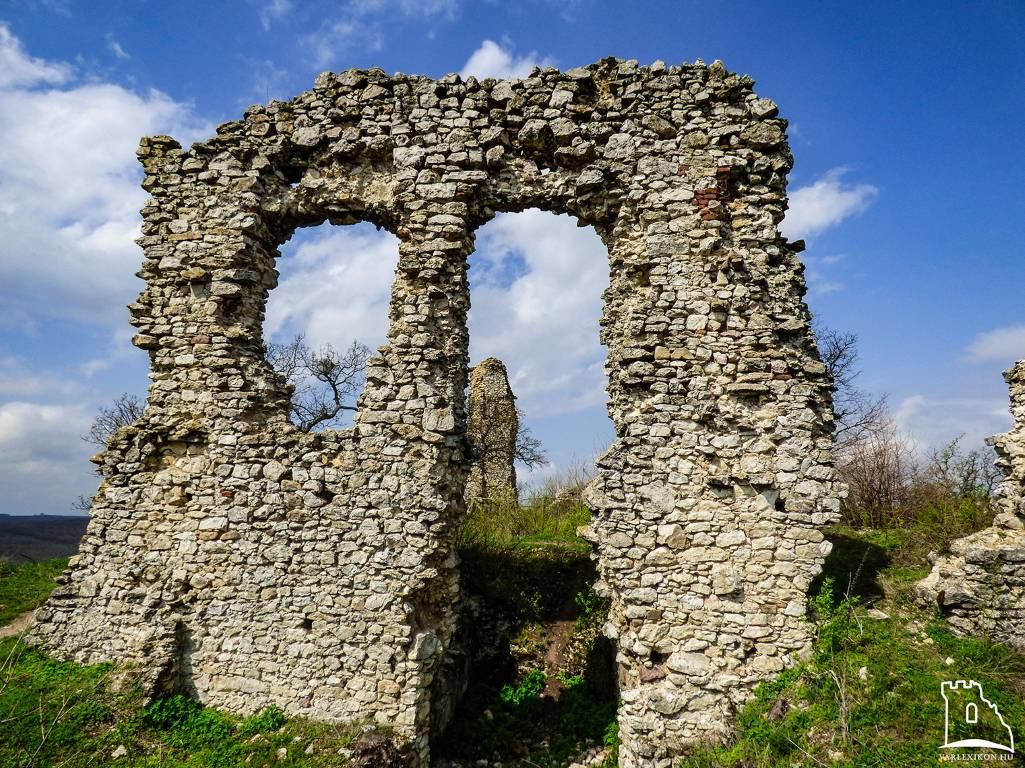


Many towns have their own special Way of the Cross, but Visegrád’s is certainly unique, as when you reach the top, you arrive at the entrance to the legendary Fellegvár, or Visegrád Castle.
Although the Stations of the Cross are inseparable from their sacred significance, in many cases they also serve, alongside this primary role, as beautiful tourist attractions and, in some instances, as hiking trails. It is true, of course, that a longer hike inherently embodies, beyond its own meaning, the traditions of pilgrimage embedded in our culture; yet: one cannot walk along a Calvary hill without reflecting on the extra time spent on one’s steps and on one’s brief, or perhaps longer, stops.
The small late-Baroque chapel, built on Castle Hill in 1770, not far from the V-shaped monument commemorating József Viktrorin (which many people mistakenly believe to be the first letter of the name ‘Visegrád’) clearly demonstrates that this Calvary Hill held great significance for the Swabian settlers who inhabited Visegrád at the time. In this respect, the path leading to the castle ruins at the top of the hill only became of interest to us following the castle reconstruction work that began in the 20th century. The renovation of the Calvary also coincided with this period, when, in 1961, Ernő Szakály created the stations with niches that can still be seen today.
The Calvary steps mark the start of our route, which begins near the cinema and opens onto Zách Klára Street. From here, the route is impossible to miss, and although it may be a bit of a slog for those who aren’t used to hills and cobbled paths at all, it promises a pleasant walk in its own right, with magnificent views along the way through the trees of the city stretching out below us and the breathtaking Danube Bend, whilst the Citadel awaits us at the end.
Photo source: visegrad.hu
Have you ever been to the Calvary in Visegrád?