
As part of the series of events known as Cultural Heritage Days, the general public was once again able to gain an insight into the exciting world of the excavations at Sibrik-dobon this year.
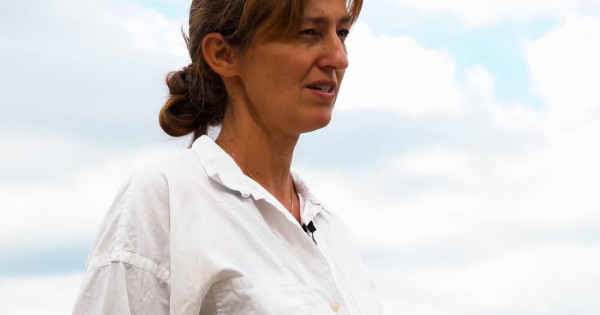
We spoke to Katalin Boruzs, the lead archaeologist, about Visegrád’s mysterious past.
Excavations began in the 1950s on Sibrik Hill in Visegrád, led by archaeologist Sándor Soproni. How did they set about their work seventy years ago on what was then still farmland?
Sándor Soproni and his colleagues began digging the first test pits on Sibrik Hill in the firm belief that there must be something there, as pieces of stone and mortar, Roman coins and fragments of medieval pottery had long been turning up in the ground in this area. As early as the 1860s, a note penned by Flóris Rómer suggested that there were Roman-era remains in this part of Visegrád, and that a fortification may well have stood here.
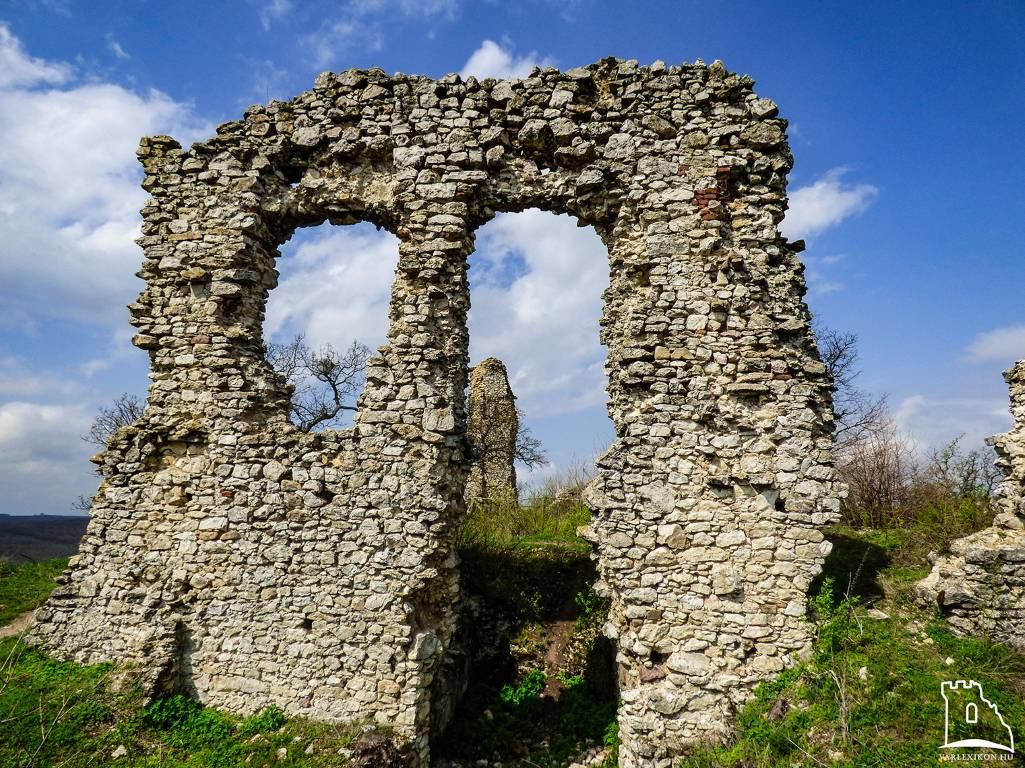
The fort was quickly located, and it also became clear that we would likely uncover artefacts mainly from the 4th century and from the period before the Tatar invasion during the Árpád era, which clearly show that the structure was in most active use during these periods. In the 1970s, larger areas were excavated, and the walls discovered at that time were raised – if we walk up Sibrik Hill today, we can see these sections of wall rising above the ground.
The last 10 years have also been very intense.
Yes. A great deal has happened since 2013. Last year, for example, we discovered the Roman-era gate of the fort. This had previously been unknown. It can be assumed that the fort had only this one gate, because during the 4th century it became common practice to wall up all but one of the gates in fortifications with multiple entrances. As the Sibrik Hill fort was built at the beginning of the 4th century, it is likely that only a single gate was constructed from the outset. Of course, a full excavation of the fort’s walls is required to prove this.
We also found the medieval gate tower, and have excavated both Roman and medieval outer towers. This year, we uncovered a 15-metre section of one of the inner buildings, which featured underfloor heating. The material finds are also highly significant: on an annual basis, two to three hundred Roman-era coins are unearthed, sometimes as many as four hundred. We owe this latter result primarily to our metal-detecting colleagues who have assisted us throughout, every one of whom is a volunteer. Among other things, these finds allow us to draw much more accurate conclusions about coin circulation; consequently, these results go far beyond their intrinsic material value. Of course, processing these groups of artefacts takes a great deal of time, but everything we learn about these centuries-old objects unearthed from deep within the earth allows us to draw conclusions about ever-new connections.
What were the most remarkable finds of the past 10 years?
In 2015, a house built into the ground was unearthed, inside which we found coin dies and a trial coin. These were tools used for coin minting. Unfortunately, the designs on the coins cannot be identified, as time has taken its toll, but it is certain that these objects date from the period prior to the Tatar invasion, more specifically the first decades of the 1200s.
The trial engraving is actually a botched engraving that was intended for a coin die, but the engraver ruined the work and the piece was discarded. However, we know that the intention was to produce a single-sided coin, so we are certain that this dates from the early 1200s. All this is particularly interesting because this collection of finds (which, incidentally, also included molten metal and a pair of scissors used to trim the edges of the coin blank) clearly indicates that coins were being struck on Sibrik Hill at that time, and was therefore an important centre in the region. Coinage was a royal prerogative, yet Béla IV was still residing in Visegrád as a prince during the 1220s. To sum up: based on our sources and finds, Béla IV was already having coins struck at Visegrád before his accession to the throne, that is, whilst he was still a prince.
We also found a smelting furnace dating from the 9th–10th centuries, complete with small smelting crucibles; this suggests that precious metals were also smelted here, although this find is considerably older than the trial engraving and hammer mentioned earlier. Research into this is already well under way, and we hope to know more about it soon.
These are extremely exciting developments. In light of this, it is easy to imagine that Visegrád has been significant for much longer than the current state of our general knowledge of history would suggest.
Artefacts from a number of different periods are being unearthed on Sibrik Hill. This clearly presents a significant challenge for researchers specialising in different periods.
The official title of the project is: Research into the Roman-era castrum and the medieval Spanish castle at Sibrik Hill, Visegrád, which is a complex team effort. Although I am the project’s excavation director, from a professional point of view this is a matter of detail. Gergely Buzás is responsible for the investigation of medieval architectural remains (he is the director of the King Matthias Museum); Katalin Tolnai is currently a research fellow at the University of Bonn, specialising in landscape archaeology and geoinformatics modelling; Katalin Gergely is a researcher specialising in the 8th–9th centuries (Hungarian National Museum); Balázs Sándor Szabó assists our work in identifying finds and phenomena from the 12th–13th centuries (Budapest History Museum). Our advisors also include Mátyás Szőke, who carried out earlier research in the area, and we are also greatly indebted to Katalin Ottományi, a recognised scholar of the Roman period. István Vida and Csaba Tóth from the Hungarian National Museum’s coin collection are also assisting us in our work, as is archaeobotanist Máté Merkl, who is now also a member of the team (Domokos Kuny Museum), as is archaeozoology student Lili Sólyom (ELTE).
Last year we were still receiving financial support from the National Institute of Archaeology at the Hungarian National Museum; this year, unfortunately, we have not been awarded such funding. Among other things, we were unfortunately unable to pay for the archaeobotanical and archaeozoological analyses this year; without substantial financial resources, the progress of an excavation is inevitably slowed down. Of course, we did receive some help in 2023: Pilisi Parkerdő covered the costs of the excavator, the museum enabled me and my colleagues to focus primarily on this project, and Visegrád Local Council provided lunch subsidies for the team for two weeks. I must make special mention of the dedicated help provided by the volunteers taking part in the excavation.
It is, however, important to note that we are part of the Hungarian National Museum, which means we can have a number of tests carried out „in-house”.
Won’t the finds in the exposed areas be damaged by the weather?
These sections are not open to the public. At the end of each excavation season, we backfill the fully or partially excavated areas, and thanks to modern technology, we are able to determine with perfect accuracy exactly where to resume work from where we left off in the previous season.
It may sound a bit strange at first that we always rebury what we have already dug up, but this is a nature reserve, so we must always restore the site to its original condition, and we must also take great care to ensure that Sibrik Hill remains safe and accessible for tourists.
Re-covering is also important from a heritage conservation perspective: we cover the exposed walls with geotextile, and the soil is then placed back on top of this. This ensures that the artefacts remain undamaged.
So the fortress was built in the 300s, and was subsequently extended in later periods.
That’s right. As far as we know, the fortress was built in the early 300s, and we have archaeological finds dating right up to the Tatar invasion. After the 380s, the fortress may have served the needs of the local population, meaning its military use was suspended for a time, though this period also came to an end (we do not yet know exactly when). This was followed by a hiatus of several hundred years; we have a few finds from the Avar period dating from this time, and then, around the 9th century, we find signs of significant activity once again. From this period onwards, we have evidence of a precious-metal smelter, numerous ceramic vessels, and traces suggesting buildings with wattle-and-daub walls.
If we come across something about which we have more questions than answers, we quickly bring in someone who specialises in the artefact in question. This means we can also involve university researchers in the process, as well as experts currently working in the area, and we endeavour to publish the findings in as many specialist journals as possible; some of the artefacts will also be put on display in due course, following the research. We can certainly say that the programme is expanding as we manage to excavate an ever-larger area, and we now know a great deal about the nearly 900-year history of the building complex, despite the significant gaps mentioned earlier.
Is there any more detailed information available yet about the future plans closely linked to the excavations at Sibrik Hill?
It is true that we have a close-knit team consisting of archaeologists, volunteers, university students and interested secondary school pupils. Given the pace at which the work is progressing, there will probably still be plenty of work to do at this site until I retire, and there will certainly still be tasks left for my successor. We usually excavate 200 square metres per season, so given the size of Sibrik Hill, there is still plenty to do. We work in a grid system, with surveyors marking out 5×5-metre areas, so accuracy is assured, but the meticulousness that is a natural part of any excavation is certainly time-consuming. C14 carbon dating and various scientific analyses are very costly, but they bring us closest to answering the questions that arise. Such processes are capital-intensive, so the results in this area also depend heavily on the resources we can allocate.
We would therefore like to further our research in a number of sub-fields, and one of our aims is also to publish our findings in this area widely. I think it is excellent that the majority of people in our country are familiar with the Citadel and Solomon’s Tower in Visegrád, but we would like to see general knowledge about Visegrád enriched by all the new insights we gain year after year.
They are organising a related conference with the research group in Visegrád on 11 October 2023.
The venue will be the Royal Palace. We are organising an open conference, and we look forward to welcoming everyone who is interested.
The 20-minute talks will cover Roman-era coins, medieval coins and the latest findings from archaeological excavations. We also intend to compile the material from the planned 12 lectures into an online volume, so that, in due course, all this information will be easily accessible online to anyone interested, in its own expanded and detailed form.
We wish you every success with the conference, and we’d be delighted to publish the forthcoming online material here on the Visitvisegrád.hu website, should we be given the opportunity to do so, as it is our shared aim to ensure that our understanding of Visegrád continues to grow with the help of the latest research, and that the most recent findings are easily accessible to anyone interested.
The historical significance of the excavations at Sibrik Hill is undoubtedly beyond question, and it is quite certain that all the knowledge we can gain thanks to this work – which has been ongoing for more than 70 years now and is planned to continue for further decades – will contribute significantly to refining our historical understanding, and in so doing may also add nuance to our general conviction that we already know the past well.
The interview was conducted by:
Róbert Fagyas