

The two beautiful marble cherub heads, which are now on display at the King Matthias Museum of the Hungarian National Museum in Visegrád, are regarded as one of the greatest archaeological discoveries in Hungary in the last hundred years or more. Their discovery proves that the very same masters who worked in the court of the Medici family, amongst others, were also active in our country, and that it is to them that we owe the pinnacle of Renaissance achievement throughout Europe.
It emerged that one of the greatest sculptors of the early Renaissance, Benedetto da Maiano and Anton Pilgram, who worked mainly in Vienna, it has emerged from a collection of artefacts unearthed during an excavation last summer that both men created works for Hungarian kings, and that their works lie buried in the Visegrád area.
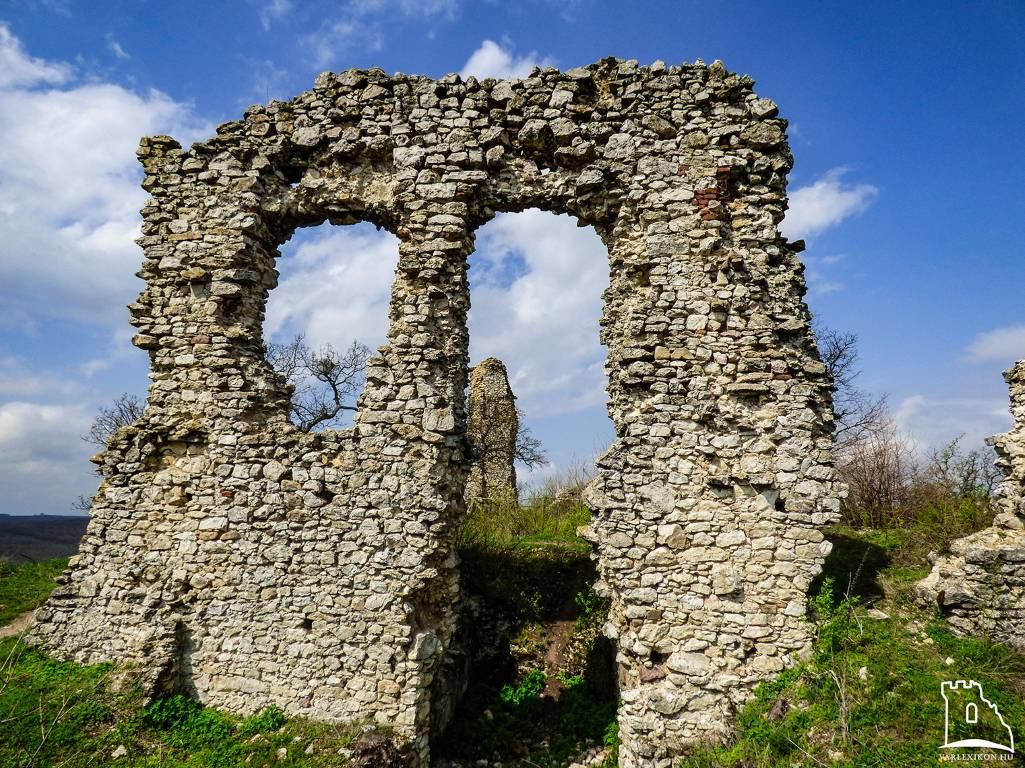
It was already known in the early 1990s that there were significant finds beneath the area adjacent to the museum (where a tennis court had since been built). It was suspected that the ruins of a Gothic church lay buried beneath the ground, which was almost certainly part of the royal residence. It was not until 2024 that the excavation began, and as soon as work got under way, what archaeologists had long hoped for very quickly emerged from beneath the ground. But there was much more to it than that. For there really was a single-nave Gothic church, and it also had a two-chambered crypt, in which the two marble stones with cherub heads were finally found. It turned out that their creator was none other than the world-famous Benedetto da Maino. This is undoubtedly the most significant domestic archaeological discovery of the past hundred years.
We are talking about perhaps the most influential sculptor of the Quattrocento; he created, for example, the pulpit in the Basilica of Santa Croce in Florence, as well as the altar in the side chapel of one of Naples’ most important churches. It has also recently come to light that he may well have been the creator of the famous relief depicting King Matthias and Queen Beatrix, and it is highly likely that the entire altar of the recently excavated Franciscan church in Visegrád is also his work, as the marble heads that have survived intact are most certainly the work of Benedetto da Maiano.
The mystery surrounding the architect of the church’s former net vault – which, of course, no longer exists, though its remains can still be seen – has also been unravelled. Anton Pilgram was the foreman of the building guild at St Stephen’s Cathedral in Vienna between 1510 and 1515, and a design drawing attributed to him had long been preserved, although no records of its actual construction have survived. It now appears that the drawing is linked to the Gothic net vault of the church found at Visegrád. It is therefore almost certain that Anton Pilgram was the architect responsible for its construction.
It is now a fact, then, that some of the most beautiful buildings at the Hungarian royal court were created by the very same masters who brought Renaissance Naples and Florence to their zenith at that time.
The sculpture can be viewed in the permanent exhibition at the King Matthias Museum, in the Hercules Hall of the Royal Palace.
Source: valaszonline.hu
Image source: valaszolnine.hu, photo: András Zsuppán
2025.01. 10.