

„I am grateful to fate that Visegrád has offered me so much.”
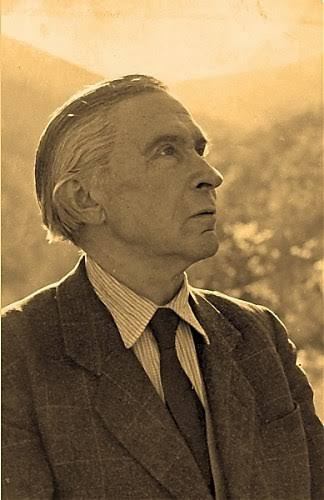
A conversation with Péter Gróf, archaeologist and historian, with the former chief curator of the King Matthias Museum at the Hungarian National Museum.
Count Péter spent his entire professional career in Visegrád. He moved straight from the Department of Archaeology at ELTE’s Faculty of Humanities to the King Matthias Museum, where, for forty years, he researched everything that had been buried in the ground at Visegrád over the past millennia. We asked him about these four decades.
How has 2024 been so far? And what are you focusing on most at the moment?
I’d like to begin with last year. There were two very important events to commemorate in 2023, to put it with a touch of humour and a dash of modesty. The first was that Charles I established his seat in Visegrád 700 years ago. The other was that last year marked the 40th anniversary of the day I began my work at the museum, on 1 October 1983. I am now retired, but I continue to carry out my professional work. A great deal of the unprocessed material I have unearthed and collected „weighs on my conscience”. The fundamental functions of museums are collection, processing and publication. They say that he who grasps at too much ends up with little. But my career has taken such a turn that, partly through no fault of my own, I have had to deal with a wide variety of subjects, so I have a great deal of work left to do, ranging from the Roman period to local history.

Your interest in local history relates to the 20th century, doesn’t it?
Yes, more specifically, the history of Visegrád in the 19th and 20th centuries. For obvious reasons, everyone at the Visegrád Museum is an archaeologist, so, for example, no ethnographic collection has been built up here to date. Years ago, the museum’s local history collection was entrusted to me. It is not a large collection; it consists of objects and documents that have found their way into it by chance. The most significant part is made up of visual material: engravings, photographs and postcards. Given that I spent most of my career on excavations, I only had time to turn my attention to local history later on. However, in the process, I came to realise that Visegrád is not only rich in archaeological terms, but also has a very fascinating local history.
Visegrád was already an important place in Roman times; I have studied this extensively and continue to do so today. Later, during the Árpád era, it once again held great significance, but it was only when it became a royal seat that it truly came to the fore. After the Ottoman period, in the 18th century, it existed as a relatively insignificant market town under manorial rule. The period of Visegrád’s rediscovery was the 19th century, when the historic ruins set against a romantic landscape and the town’s ancient past began to feature in the works of writers and visual artists. Writers and poets such as Arany, Vörösmarty, Kisfaludy and Kazinczy, along with the visual artists of the era, portrayed Visegrád as a symbol of the nation’s glorious past. Later, in the final third of the 1800s, the institutions of Hungarian archaeology and heritage conservation were established, and scholars such as the art historian and archaeologist Imre Henszlmann, architect Frigyes Schulek and the enthusiastic Visegrád parish priest József Viktorin, who did a great deal to promote the town’s built heritage, particularly the research and restoration of the castle. Many artists and public figures choose Visegrád as their home or a regular holiday destination; one need only think of the aforementioned József Viktorin and Artúr Görgei, commander-in-chief of the War of Independence.
The Görgei commemorative year has brought the general back into the public consciousness and has once again provided an opportunity to shed new light on the life and work of Görgei, who was branded a traitor in the historical narrative spanning 1945 to 1989. You’ve also spent a great deal of time studying him.
It is very important that the people of Visegrád are aware of their values, as this forms the basis of a healthy sense of local identity. After 1945, we organised a conference and a modest exhibition on Görgei at the museum in Visegrád – the first such event in the country – in May 1986. At that time, the image of „Görgei the traitor” was still very much alive. From the 1990s onwards, in collaboration with the museum, the local council, the community centre, the park and forest management, and members of the public all helped to preserve the memory of the general.
We named the staircase near his home after him, marking it with a commemorative plaque, and we restored the monument on Görgey Hill. During the Görgey commemorative years of 2016–2018, we organised an exhibition and a conference in collaboration with the community centre. We might say, with a touch of humour, that Visegrád has the highest concentration of Görgey statues per square metre in the country: in the town hall courtyard, in the garden of the General’s House and by the Görgey Staircase. The latter was unveiled by President János Áder on 16 May 2018.
Are you also researching the history of the 18th-century settlements?
This period is the subject of research by my colleague István Kováts, who in recent years has excavated the cemetery in the grounds of the Áprily School, which contained the remains of the earliest Swabian settlers, and has written several articles and a short book on this period. Whilst studying the history of Visegrád in the 19th and 20th centuries, I came across the activities in Visegrád of figures such as Tibor Zsitvay, Miklós Bánffy and the Schulek family, but I have also written about the history of the museum, with particular reference to Miklós Héjj’s tenure as director.
All this is also interesting in light of the fact that you originally begin with the Age of Migration.
Yes, I originally graduated with a specialisation in the Migration Period and the Middle Ages, and the subject of my dissertation was the analysis of artefacts from an Avar-period cemetery that had been excavated some time ago. My move to Visegrád was somewhat a matter of chance. As a final-year university student, I was working on the excavation of a rich Avar cemetery in Zamárdi, under the supervision of Professor István Bóna. The head of the museum department at the ministry happened to be visiting at the time, and Professor Bóna – to whom I had dedicated my thesis – asked him if he might know of any job opportunities for me. He knew of two vacancies, one in Pápa and one in Visegrád. I went to Pápa, but by then the post had been filled. So I set off for Visegrád, where Miklós Héjj took me on, and that is how I ended up in Visegrád. In 1984, my first archaeological project was the survey of the site of the Makovecz-designed sports hall. From 1986, excavations began ahead of the planned construction of the water staircase, where my colleague Dániel Gróh and I worked very hard. Between 1984 and 2018, I was involved in excavation work practically every year. Over the course of these more than three decades, I worked at sites dating from prehistory to the Middle Ages. I would like to highlight a few of these: the Roman fort at Gizellamajor, the watchtowers at Lepence and Szentgyörgypuszta, Roman cemeteries, the Árpád-era village in Várkert, and the excavation of the medieval town of Visegrád. All in all, I am grateful to have been involved with such a rich and varied archaeological heritage in Visegrád. There was another important benefit to the archaeological work: a great many young people took part in the excavations, and some of them went on to choose this career path. I have many fond memories of those years.
I imagine that digging for all these decades hasn’t always been a completely trouble-free adventure.
When you’re young, you experience so many things with greater enthusiasm and ease. Let me tell you a story related to this. In early December 1987, Dániel Gróh and I uncovered a small Roman watchtower in Lepence. We had to hurry, because this area was due to be flooded as part of the construction of the barrage and we didn’t have much time left. We had no help either, so the two of us were pushing a wheelbarrow through the snow-covered mud. Just then, a team of Austrian barrage construction specialists, dressed in smart protective overalls, arrived in a smart new Volkswagen minibus, and their leader called out to us in a friendly tone: „Ah, Herr Professor”. We stood there looking at one another in our muddy clothes, with our wheelbarrow, wondering which of us could be the „Herr Professor”. Of course, the technical conditions for archaeology in Hungary have improved considerably since then.
And was the watchtower really destroyed, just as it was?
Of course. They bulldozed it. Much of the floodplain area around Lepence was destroyed and ended up under water. By the late 1980s, serious civil and professional opposition to the barrage had already begun, and several demonstrations took place. The struggle against the barrage project became one of the symbols of the transition to democracy. We archaeologists found ourselves in a rather peculiar position in all this, because whilst we did not agree with the construction, we worked in close collaboration with the water management officials carrying out the barrage construction work, who were very fair and helpful towards us. The government of the time tried to frame our work as follows: ‘Look, look, what a wealth of opportunities for excavation there are here now, thanks to the construction of the barrage.’ We had a different view of the matter. Literally, because one day, as we were heading home from work, we glanced at our work site and captured the scene: sunset, barbed wire and an excavator. This photograph was also featured in an exhibition at the Danube Museum in Esztergom, funded by the water management authority, which showcased the results of the archaeological excavations carried out prior to the construction of the barrage.
Yet when people think of Visegrád, the Middle Ages spring to mind.
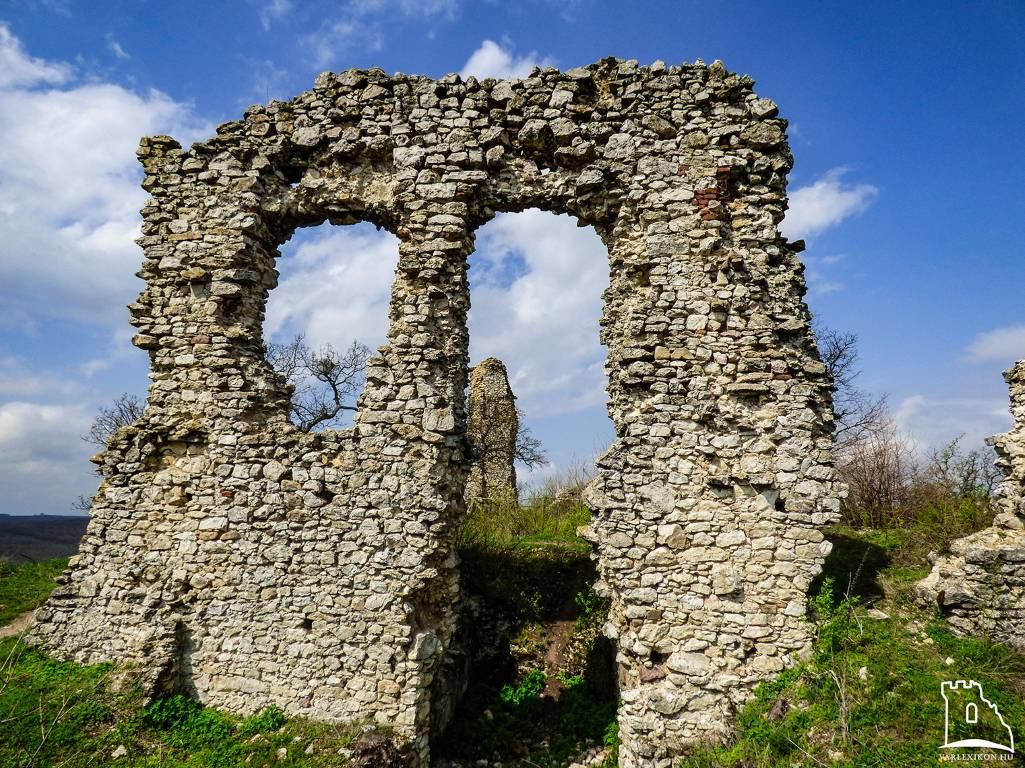
Visegrád is traditionally associated with the Middle Ages in the public consciousness. Archaeological excavations and the restoration of the Visegrád Castle as a historic monument began in 1872, whilst work on the royal palace began in 1935. Understandably, Visegrád was one of the centres of research into the Hungarian Middle Ages. By contrast, research into the Roman period only began in the 1950s with the work of Sándor Soproni. The Hungarian Middle Ages, the world of the Hungarian kings, is closer to people’s hearts. Fully understanding this, I consider it very important that the remains of the Roman heritage found here – which are linked to both European and Hungarian culture – should also receive greater public attention. However, this would require the excavated remains to be restored and their surroundings landscaped. The Roman Limes sites at Visegrád could also be showcased from a tourism perspective, particularly if the Danube Bend cycle path were to be built. The Roman Limes sites in England and Germany, which form part of the World Heritage List, play an important role in the fields of science, culture, education and tourism in those countries. We still have much to learn in this regard.
It is no exaggeration to say that the proximity of the Danube is by no means insignificant from an archaeological point of view. What sort of things turn up when the water level is low?
The museum has a collection known as the „Danube finds”. We have a very substantial collection of weapons from these finds, which were unearthed during dredging work on the bed of the Danube. The history of this collection has been rather unusual. According to entries in the museum’s inventory books from the 1960s and 1970s, those who handed in the finds received a finder’s reward. Then, during the 1970s, the River Regulation and Gravel Dredging Company and the Hungarian National Museum signed an agreement whereby socialist work brigades would hand over the artefacts free of charge as a donation. Well, from that point on, no more artefacts turned up… Incidentally, a 15th-century gold plate was also recovered from the Danube in the 1970s. A replica of this can be seen in the Royal Palace, in the princely apartments; the original is in the Hungarian National Museum.
This is interesting because many believe it is possible that the gold plate came from one of Queen Mary’s ships that sank in the Danube. After the Battle of Mohács, the widow of King Louis II, Maria of Habsburg, loaded her valuables onto a ship whilst fleeing from the Turks, and the convoy set off for Bratislava, but the captain of Esztergom Castle, taking advantage of the chaotic situation, decided to attack this valuable convoy. In recent years, the sunken ships have also been searched for using modern underwater archaeological equipment, but the search has so far been unsuccessful. This is partly due to the fact that the accelerated current of the Danube in the Danube Bend carries away sediment and artefacts. In 1988, during the construction of the barrage, the Danube was diverted, the ring dyke was built, and the water was then pumped out of the riverbed for the duration of the works. We were able to go in there and, armed with metal detectors, began searching the sediment with great enthusiasm. We found a few iron cats and a couple of old batteries. As might be expected, the flood had already swept away all artefacts from the rocky riverbed.
There’s something there in Dömös too, under the waterworks building…
My colleague László Iván had heard from local residents that, when the Danube is low enough, wooden planks and pieces of metal protrude from the water, but nobody knows what they might be. We went out and surveyed the area. We could see the remains of a boat in the shallow water. We handed over the artefacts we had collected and the photographs we had taken to János Attila Tóth, a leading researcher in Hungarian underwater archaeology, who examined the wreck. An 18th-century barge lies there in the Danube, beneath the waterworks.
Roman watchtowers, a medieval gold plate, mementos from the Second World War…
Indeed. I excavated the Roman watchtower at Szentgyörgypuszta in the years following 2016. On the western side of the tower, I discovered a zigzagging trench which, suspiciously, did not look Roman. I asked my colleague, the military historian Lajos Négyesi – a leading expert in Hungarian battlefield research – to examine this trench. He immediately concluded that it was a Second World War foxhole. A similar trench was also found during the excavation of the Roman watchtower in the castle grounds in 1962–63. It is an interesting parallel that the location of the watchtowers, built on the ridges overlooking the Danube to defend the Roman limes, also played a role from a military perspective in the battles fought here in 1944.
Which artefact, out of all the others, has had the greatest impact on you over the past forty years?
Archaeologists are often asked this question. Whilst experts generally dislike esoteric or overly sacral approaches, one such phenomenon does come to mind when I think about this topic. In June 1989, on the hillside next to the Gizellamajor fortress, we uncovered what was thought to be a prehistoric pit, in which a skeleton was found, lying upside down, pressed against the side of the pit. I could not help but ponder the significance of it all. A man had been buried in a humiliating manner, even in death. Whether this person had been ostracised, or whether some sin weighed upon their soul, we cannot say. But they were not granted a proper final resting place. What was truly frightening was that, at exactly the same time, the reburial of Imre Nagy and his fellow martyrs was taking place. They, too, were buried in a humiliating manner, bound in tar paper with wire and then buried face down. At the time, this „encounter” moved me deeply and meant far more to me than the discovery of a valuable object.
The interview was conducted on behalf of the Visegrád and Surrounding Area Tourism and Marketing Association by:
Róbert Fagyas