
This year we are celebrating the 176th anniversary of the Revolution and War of Independence of 1848–49, in which Visegrád has, in a way, played a part throughout history…
The traditional commemoration will take place at 5.00 pm at the ’48 Memorial in Visegrád, and we warmly welcome anyone interested to attend. The monument, situated on Széchenyi Street, is very easy to spot, as it stands next to the Millennium Chapel, which you’ll pass as you walk along Fő Street from Dömös towards Visegrád town centre. From there, even at a leisurely pace, you can reach the general’s former home in under half an hour, if you fancy this little stroll.
As we continue along the bends of Széchenyi Street, we pass the King Matthias Cultural Centre, where an open-air exhibition at the entrance now recounts the eventful life story of Gyula Krúdy, who, although an unconventional figure in 20th-century Hungarian literature, the War of Independence plays a key role in many aspects of his writings (just as it did in the stories of his ancestors).
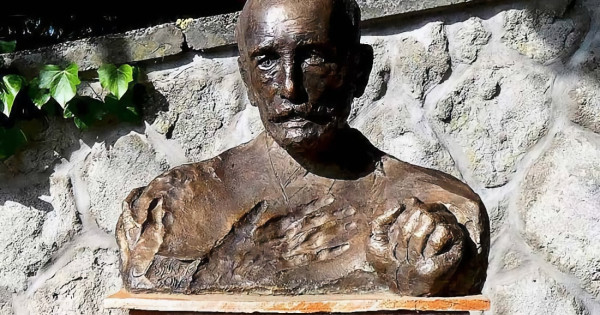
Crossing the small bridge, then turning left onto Nagy Lajos Street, we reach the Parish Church in a few minutes’ walk downhill; continuing on our way (joining Fő Street once more), we can enjoy a lovely stroll. We’ll pass the Palace House, the King Matthias Museum and, of course, the Royal Palace; then, when we reach Road 11, we can even pop over to see the statue of King Matthias, before heading towards Salamontorony Street with its cat-step staircase. As you make your way up, you can’t miss the staircase overlooking the Danube, named after General Artúr Görgey, who spent the final – yet still very long – phase of his life in the villa behind the walls running alongside the stairs.
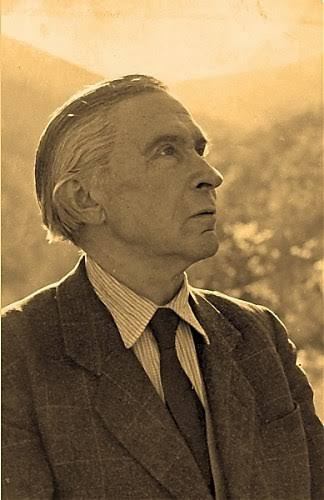
As we linger by Görgey’s bust, paying our respects to his memory, we might also reflect on the strange fate that life had in store for him. He is depicted as an elderly gentleman tending his garden, unconcerned with the past, who, according to this portrayal, lived in seclusion in the Danube Bend for nearly forty years until his death in 1916, having resigned himself to the suppression of the former revolution, and living with his back turned on events in the Danube Bend for nearly forty years. It is very important to qualify this unflattering image, and instead of such tempting romanticised reminiscences of the past, here in Visegrád too we should think of Artúr Görgey as someone who, during his 98-year life, became a martyr of 1848.
Visegrád and Surroundings Tourism and Marketing Association
2024. 02. 28.