

Visegrád thoughts to go with the coffee – from the coffee…
Books. Letters. Notes. Old postcards. Photos from my twenties, long thought to have been deleted by more modern minds, in a folder saved from somewhere. Lately, somehow, everything seems to be surfacing from the depths of drawers and hard drives, from the very bottom of dusty cardboard boxes. Often, we don’t even have to look for them. We sit buried in our thoughts, whilst outside there is a strange—though increasingly less unusual—silence; cold coffee in our hands, the table in front of us and all the clutter around it, and then suddenly there’s a letter from 1993; a dreadful scone recipe from the early 2000s; the spare buttons from a coat that had long since been torn and then lost, wrapped in a bit of nylon – a whole host of tiny, insignificant things. They surround us and won’t leave us in peace.
Of course, we could pop out into the courtyard, have a bit of a game of ball with the dog, give the floor a quick sweep, or sit out on the terrace in our coats. The weather’s clear. Visegrád is peaceful. It’s a good time to think.
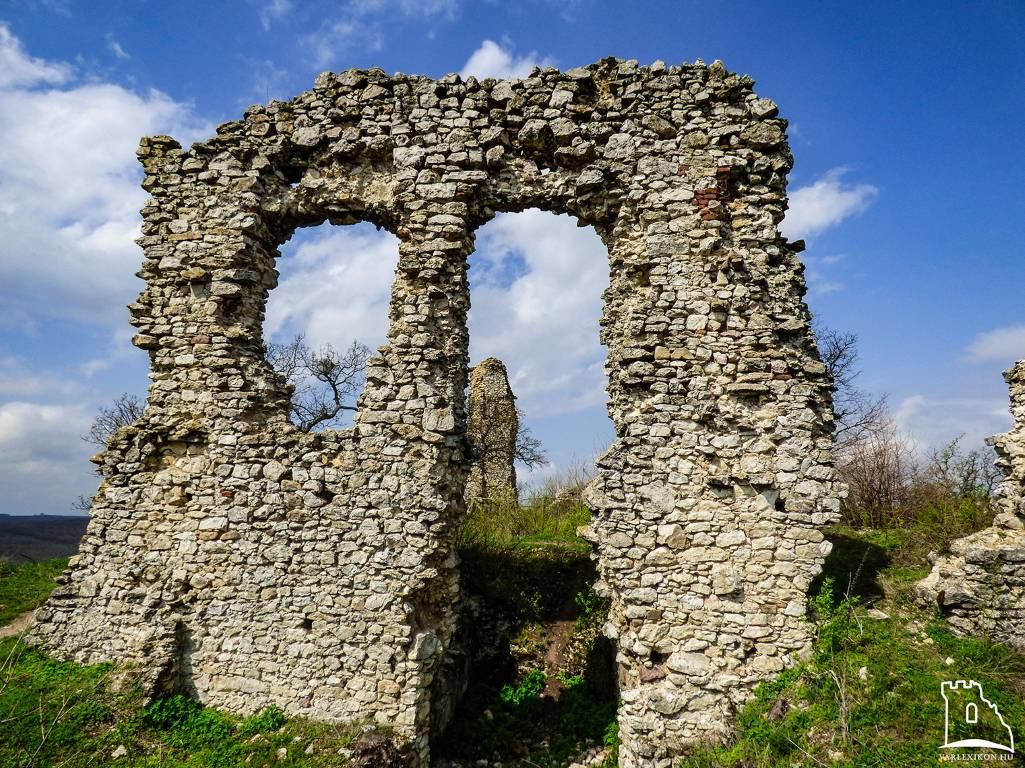
Then, as is usually the case, within a few minutes the Citadel appears in the corner of our eye.
It’s always like this, so much so that we don’t even give it a second thought. It might be hidden by a wall here, or you might not even be able to see it from under that walnut tree over there, but it’s only a matter of time before you catch sight of each other again. A strange neighbour. As constant as the moon or the stars.
1009. In his charter of donation to the Bishopric of Veszprém, King Stephen mentions a castle situated at a place called Visegrád. By this time, the glory and fall of Rome were long past, and the castle mentioned by Saint Stephen was the Spanish fortress towering on the site of the former Roman fort. The Romans were here. Then they disappeared. Visegrád remained.
1221. In a charter, Pope Honorius III refers to Greek monks who had been living for some time at their monastery in Visegrád, which had been founded by Andrew I. A flourishing culture, beautiful countryside. For another twenty years…
1241–42. The Tatar invasion wreaks havoc across the country. Visegrád’s fate is also sealed. To use the usual phrase:
„The city will be destroyed”. Forever?
The 1250s. Barely ten years after the devastation, Béla IV and his wife were utterly captivated by the countryside. They decided to restore what the Tatar invasion had destroyed and to build a magnificent system of castles on the iconic site still known today as Várhegy.
1320. Charles I established a seat of power in Visegrád that was extraordinary even by global standards, continuing the work begun by Béla IV. Under the rule of the Anjou dynasty, the town flourished, and by the middle of the decade it became the venue for one of the most significant events in contemporary European economy and trade (the 1335 meeting of kings). Charles’s son, Louis the Great, would later keep both the Holy Crown and the Polish crown here in the Upper Castle.
From 1476 onwards, King Matthias also paid particular attention to Visegrád; most of the town’s legends, well known to all Hungarians, date from this period. The royal residence, situated in the heart of the Danube Bend, became one of the European centres of the late Gothic and Renaissance periods. The arts, literature, science and culture were synonymous with Visegrád. Bonfini’s memoirs also bear witness to this.
The 150 years of Turkish rule then brought about the end of Visegrád. The castle complex was destroyed, and its remaining ruins were carried off to be used in minor building projects in the surrounding area. The town’s once-illustrious and noble inhabitants fled, and the area became completely depopulated. Visegrád, which had flourished for half a century, was literally overgrown with weeds, and nature reclaimed everything that the Danube garrisons of the Province of Pannonia had begun to build many, many centuries earlier. It was not until the 1700s that German settlers arrived in the area at the invitation of Maria Theresa.
Was that really all there was? [A sip of cold coffee, a bite of a hard scone. Never mind, it’ll be lunchtime soon anyway…]
What is that up there? A memory? A reconstruction? A memento of what „King Charles’s castle might once have looked like”? Is that all there was to it, is that all this is? A waxworks museum? No. Definitely not…
Year after year, millions visit this region, which was once renowned throughout the world; despite its status as a town, it remains a small settlement of barely 2,000 people, yet one so faithful to its past – to all that flows from the ancient walls, the old walls and the Pilis Mountains, that its inhabitants – just like their ancestors – know full well that Visegrád is eternal, and that what history has left here for them – for us – is unique, unsurpassable and, most importantly, alive. For „even in 150 years, we have not become Turks.” For although we must now shut ourselves away, fall silent, and accept what the forces of nature are now inflicting upon the world, – Visegrád remains here for us – for you – with the living memory of the great figures of the past, the unforgettable beauty of the landscape, in short, most likely with everything that has captivated even the greatest figures of our history time and again over a thousand years, when they first set foot on Visegrád soil by boat, by cart, or whilst out hunting.
Visegrád and Surroundings Tourism and Marketing Association
2022.05.20.