

When did your interest in culture and the arts begin?
Was there some sort of major realisation, a life-changing experience, that set you on this path, or was it simply an inner voice that you chose to follow?
It was actually a family influence, as my parents loved reading and had built up a sizeable library, which seemed especially vast to a child’s eyes, because books, newspapers and magazines were everywhere in our house. It was a constant family problem figuring out where to put the countless books, which were shuffled back and forth between all sorts of boxes and ever-increasing numbers of shelves; even today, we’re still trying the impossible task of reorganising them following a house renovation. I grew up in the Apátkút Hunting Lodge, I might say, amongst books and trees, or trees and books – the order doesn’t matter, because there was plenty of both, that is to say, there were heaps of both; what’s more, the library is constantly growing and changing, just like the forest. And there’s always something new to rediscover in it – an inexhaustible treasure trove. What’s more, I’m naturally curious, which is why I taught myself to read whilst still at nursery school; I was so fascinated by letters, words and sentences. I’ve been reading for as long as I can remember, and it’s nothing short of a stroke of good fortune that, as an adult, I was able to study literary studies and that my current job allows me to work with literature and the arts.
What did Visegrád mean to you when you were a child, and what does it mean to you today?
Visegrád means a great deal to me, even beyond my personal ties; it all begins with my family, as most of my ancestors lived their lives here and are buried here, from my parents right back to my great-great-great-grandparents, all were baptised in the church in Visegrád, as my son has now been too; so we simply belong here – this is our home, for the living and the dead alike. And anyone who has grown up here remains a Visegrád native, even if fate takes them elsewhere for a time. We don’t live just anywhere, but I could talk for hours about what that actually means, so for now I’ll just mention a few things that have been on my mind quite a lot of late.
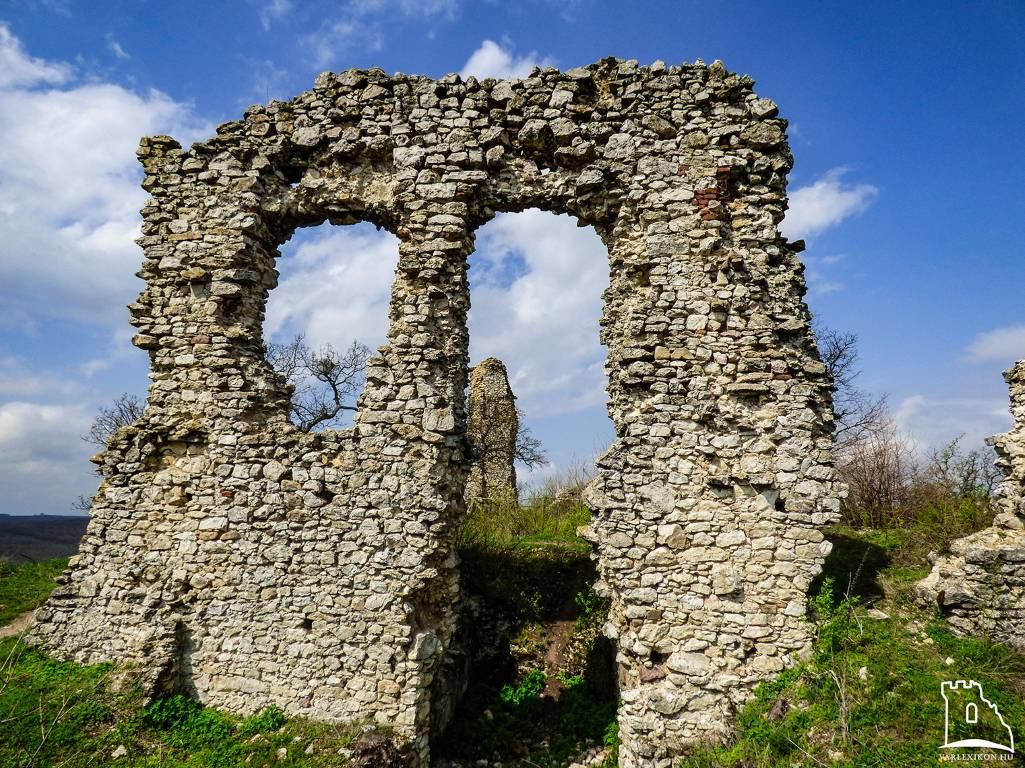
First of all, Visegrád represents a different scale in both space and time: it is a cliché to say that here we are surrounded by the past quite densely, and everyone senses this immediately, wherever they go in the town. As a child, I experienced this as if a living history book had become an endless playground for us. Of course, it is only as adults that we come to understand that the surviving traces of the history that lives on with us – be it the watchtowers or the ruins of the royal palace – but also our families’ Swabian heritage, all serve as a reminder of the profound and varied richness of our shared past, whilst at the same time highlighting the inevitable transience of it all. Moreover, the forest that surrounds us all reveals something of eternity within the cycle of nature. As Uncle Laci Madas used to say: “,”Whatever happens, the forests of Pilis will turn green again next spring!” That is why, as residents of Visegrád, we can view the world from a marvellous dual perspective: both from the vast vantage point of a history stretching back thousands of years, and from the certainty of nature’s eternal change and yet its ever-renewing constancy. In other words, we live alongside a profoundly deep past, and so far we have spoken only of the temporal dimension of this landscape; we have not even mentioned its spatial characteristics, even though it is a perfect example of the concept of a cultural landscape. To use a natural analogy, our countryside is like a historical coral formation: every protrusion tells a story of the past.
And for me, the linguistic aspect of all this is particularly important; it’s reflected in the names of the places – just take the Ördögmalom Waterfall or the Erdőanyai Meadow, for example – what poetic names!
All of this, of course, constitutes a rich heritage for which we bear a responsibility. I was fortunate enough to spend a few years at the King Matthias Museum working as a museum educator, sharing some of this heritage with children and adults alike, and after 2006, for one term of office, I was able to work for the city as a local councillor, chair of the cultural committee, and subsequently as deputy mayor. Personally, I live by the saying that only trees with deep roots grow to the sky. On the one hand, this means that our cultural heritage is an inseparable part of our identity. A tree that has lost its roots, however, withers and is blown down by the wind. I could also say that we are all just leaves on the tree of life that is our family, but it is from the roots that we draw our life. Incidentally, Tamás Vígh’s ‘Tree of Life’ sculpture on the banks of the Danube, which we unveiled during the 2009 Millennium celebrations, also symbolises the succession of generations, but extended to the whole of Visegrád, to everyone who has ever lived here and will live here in the future. On the other hand, the saying mentioned earlier also applies to the fact that we can only truly understand anything through in-depth study; superficial knowledge does not lead to genuine understanding.
But to get back to your question, it all boils down to one thing: for the people of Visegrád, Visegrád is quite simply the centre of the world. (Just as, of course, the inhabitants of every other town have their own little world at the centre of their universe, but that’s their problem.) What’s more, we have tangible proof of this: here in the Danube Bend, there’s a curious phenomenon whereby the northern tip of Szentendre Island faces south – both directly beneath Visegrád – since that’s the direction the Danube flows – and above Visegrád – since it is, after all, north of us. Joking aside, this is actually true; anyone can check it on a map.
In an article you published in 2021, you write, in connection with the guided tours organised annually by the King Matthias Museum in Visegrád in relation to its current excavations, that “This is not solely a programme for specialists; in the case of the excavations, it also draws on the local community, as many residents of the area are interested in research into the history of their own town.” Do you feel that the people of Visegrád have a keen interest in local history? Is this a trend that gives us reason to view the modern-day desire to connect with the past in a positive light?
As editor of Kortárs Online, one of the key questions for me in recent years has been how cultural and arts journals can hold their own in this rapidly changing world, and how they can keep pace with the accelerating transformation of the online landscape and readers’ habits. In this context, I have been exploring the latest trends in various cultural institutions, such as museums, as the changes in information and communication technology in recent years have brought about a spectacular renewal in this field.
The museum world faces a wide range of challenges in its own right, as it embodies a kind of permanence through the preservation and presentation of the values of the past, which in turn stands in stark contrast to the demands of the masses, who are socialised by the instant gratification of the entertainment industry and crave quick impressions. The museum is a „slow genre”, but there are significant values inherent in this. In that article, I wrote that, in the face of the superficiality of fleeting attention, the museum of the future can preserve its own value as a space for deep engagement and authentic knowledge. It is now a fundamental requirement that museums educate whilst entertaining, but they must not compromise on quality. I also wrote that „the 21st-century museum is neither an island nor a secluded monastery, but an open – indeed, thanks to digitalisation, now wall-less – cultural space.” The question is how to offer authenticity in the face of the sterility of the virtual world, and numerous answers have emerged through interactivity and the personal involvement of visitors – from live historical tours, where the past can be tangibly experienced, right through to the possibilities of the „inside-out museum”, where storerooms and the restoration workshop are opened up to visitors, or, as is the case with the King Matthias Museum in Visegrád, where excavation tours are organised. The most important thing here is for local people to realise that the museum does not exist in a vacuum, but rather explores our shared past – all the history that lies here in the ground beneath our feet.
In answer to your question, I wouldn’t emphasise the connection to the past, but rather the community-building power of such events. Through events such as these, anyone can experience that a town’s values are by no means self-evident; they do not simply exist on their own, but are the result of the hard work and self-sacrifice of specific individuals. This is just as true of the Museum as it is of the Parkerdő, but even more so of civil society organisations, such as the Sándor Soproni Association, which is breathing new life into the Gizellamajor Fortress, or the Visegrád Roses Association, which is making the streets bloom, or just as the Ethnic Minority Local Council breathes life into the Country House. I could give many other examples; my apologies if I do not name many of them now, but the most important thing is to realise that Visegrád is not the streets and the houses, nor is it merely the sum of its ruins and mountains, but rather all of us together, and it is entirely up to us to shape what it becomes. In other words, local history is not a past separate from us, but is being written alongside us – for to our grandchildren, we ourselves will one day be history.
Darvasi, Domokos Szilágyi and Imre Oravecz, to name but a few of the authors whose works provided the themes for your early conference papers and studies. It would seem, then, that your interest in contemporary literature was already present right at the very start of your academic career. How did you come to be interested in them? Most of us spend years studying the authors of classical modernism, or even earlier periods, before venturing further along the timeline. How did this happen in your case?
In fact, it is precisely from the perspective of literary history that contemporary Hungarian literature has become particularly interesting to me, as it initiated a completely novel renewal of numerous traditions that had seemed unshakeable at the end of the 20th century and at the turn of the millennium. Contemporary literature, too, exists within its own historical context; indeed, what is often most exciting is the way it re-interprets its own precedents, and the way it engages with or gives voice to the art of earlier eras. Countless examples could be cited: take, for instance, the way János Háy weaves lines from the Old Hungarian Lament for Mary into his thoroughly modern *Passion*, thereby rendering the prayer text of contemporary drama utterly timeless; whilst Péter Esterházy’s works encompass the entire literary tradition of Central Europe, from Péter Pázmány to, broadly speaking, Hrabal. So, for me, contemporary literature does not exist in isolation, but only within the context of the entire history of Hungarian literature. Every poem or novel fits into an existing tradition, whether by renewing it or by standing in sharp contrast to it. And, of course, in every work, new layers from different eras are piled upon one another; but from a historical perspective, the literature of later generations is only capable of entering into a dialogue with earlier works, and may even cast classic or even forgotten works in a completely different light.
My very first published essay focused on a work by László Darvasi, in which I examined the poetic techniques he uses to construct what is, in itself, a truly fascinating linguistic world. Since then, I have continued to write about such and similar fascinating details, be it the prose of Imre Kertész or László Krasznahorkai, the poetry of Imre Oravecz or Balázs Szálinger; my critiques of photographic art also seek to convey the joy of discovery and understanding.
Although, based on what I learnt during the seminars with József N. Pál, it is not difficult to imagine how a student’s interest in sport might grow ever greater – even if it is essentially non-existent at first – yet in your case, exploring the connection between sport and literature has now been a passion for nearly a decade. Please tell us about this.
This is yet another inexhaustible topic; it’s difficult for me to speak about it briefly. Sport poetry is indeed one of my most personal literary themes, and within that, my research focuses primarily on football-related poems, ranging from Ernő Szép through Attila József and Dezső Tandori right up to Dániel Varró. I’ve always loved football, but it was in Madrid that I first truly experienced a different kind of passion for the game, where the Spanish really do treat every single match as a matter of life and death; what’s more, it was there that I came across some particularly fascinating football poetry. Who would have thought that the Spanish poet Rafael Alberti had written an ‘Ode to Platkó’, that is, a poem dedicated to the goalkeeper Ferenc Plattkó? From a literary perspective, what interests me most is what poetry reveals about football – the experience of the game, the play itself, the support, the competition and the passions inseparable from it. This also includes exploring what lies behind the popularity of football, whether at the turn of the century, when professional football was born, or at the turn of the millennium, when Hungarian football was going through a particularly dismal period. And, above all, what kind of lyrical language does the poetry of football create, and how might a thorough analysis of this language – and the passionate relationship reflected within it – help us to understand ourselves better?
Underlying all this is the now clichéd notion that football is not simply a sport, but much more than that. For the spectator of the moment, for example, it is a living art form with fundamental theatrical characteristics, as it is confined to a specific space and time; its stage is the stadium, its acts are the halves, with extra time in the event of more serious drama. Whilst the performance does have formulaic dramatic moments, such as the choreography of corners or free kicks, the course of any given match remains entirely unpredictable. According to its unwritten rules, it must always contain a few obligatory theatrical elements, such as the similarly repetitive choreography of goal celebrations, the despair following missed chances, and the more frequent and spectacular displays following fouls. Alongside all this, it is also a narrative genre – an epic or a lyrical tragedy – but it can, in a single moment, become a burlesque that ultimately turns into a Passion play, that is, a profane tale of suffering. During the broadcast, it is at times an ode, an epic, a poignant monologue, and on occasion an absurdity verging on comedy. So every single match is a drama unfolding before our very eyes, be it a triumph ending in a happy ending or a heart-rending tragedy. In other words, football is, ultimately and in every instance, poetic – just like any passion. One simply cannot speak of it in any other way.
In 2022, you became the editor-in-chief of Kortárs Online. What path led you here?
I used to write literary reviews for *Kortárs Folyóirat*, and was then asked to contribute a series of art photography reviews to the magazine’s online edition. It was here that I first became a member of the editorial team, and later its editor-in-chief. Since then, I have been overseeing all the activities of the online editorial team. Kortárs Online operates in parallel with, but separately from, the print edition, as it represents a completely different genre by publishing daily reviews, reports, essays and interviews covering all branches of the arts, including film, music and theatre, whilst Kortárs is a monthly literary and fine arts journal. The articles appearing in KO are quite kaleidoscopic, as we do not limit the topics; indeed, we are open to all contemporary cultural phenomena. To mention just a few examples, we have recently written about István Nádler’s new exhibition and the band Esti Kornél’s latest album, but we have also published articles on opera premieres and contemporary crime novels, as well as on the rise of immersive exhibitions, alongside pieces in our ‘Cybertext’ series exploring the aesthetic aspects of the latest video games and anime series.
For us, what matters most is the questions raised by works of art and artistic phenomena, and the context in which we can interpret them. That is why, for example, we have previously written about the film *Barbie* in the context of marketing films, then about Lady Gaga’s collaboration with the Louvre in relation to the latest museum trends, or about the art-historical implications of the Kádár cubes. We also have regular series of articles, such as those focusing on children’s and young adult literature, or the literary series *Leporoló*, which revisits forgotten classics; we also regularly review exhibitions by female visual artists. Most recently, László Halper launched a series of articles on the history of twentieth-century popular music, from ragtime to the new wave. One of our most successful series on this theme is our series of interviews with film professionals, from which we were able to publish an anthology in 2024 entitled *Csapó! Professions Behind the Film*. In it, we aim to shed light on the professional background of one of the most dynamic creative industries, from location scouts to intimacy coordinators. Even from this brief list, you can see that this kind of editorial work is anything but boring – quite the opposite, in fact.
So you’re in charge of the online version of one of today’s best-known cultural magazines, which has provided a platform for writers such as Ágnes Nemes-Nagy, János Pilinszky, Miklós Mészöly and Sándor Csoóri over the past nearly 70 years. This is a serious responsibility as well as an honour. How do you feel about this? Is it a burden? Or quite the opposite?
This is certainly a great honour; I’ll do my best to live up to it. A few years ago, I launched a series in which we pay tribute to or commemorate Kortárs Award winners who are celebrating some sort of anniversary by revisiting the works they have published in Kortárs over the past decades, as well as articles about their works. I was myself surprised at the incredible treasures I’ve been able to draw upon in these online tributes, for example by selecting from the writings of Nándor Gion, József Tornai, István Ágh, Imre Oravecz, János Marno, László Marsall, Gáspár Nagy, Tibor Zalán or even Gáspár Gróh. Based on all this, and considering these authors, our sole criterion can be none other than quality – nothing else. We are, of course, well aware that, as there is nothing sensational about what we publish – nor is it quick or easy to digest – we will, unfortunately, never be popular; but then again, we are not here to compete with tabloid mediocrity. Our benchmark is that whatever we publish should remain just as relevant decades from now. And fortunately, this is reflected on Kortárs Online too, as our material from years ago loses almost none of its relevance and can be reread at any time.
Amidst the extraordinary clamour of the online world (pardon the cliché), how much of a struggle is it these days to run cultural platforms in the hope of attracting as wide a readership as possible? Do you have a stable readership? Do you maintain active links with other cultural journals operating in the online space? As far as the authors are concerned, collaboration with these publications seems to happen organically. Is the situation similar when it comes to the editors? Or do you see the whole thing differently from the outset?
I see it differently in that this is not a battle, but a continuous process of thinking together and building something. This, of course, brings with it interesting challenges in the ever-changing online world, to which we try to respond with varying degrees of success, as far as our resources allow. Perhaps the concept of the ‘attention economy’ best describes the competition for readers, but we do not wish to take part in that. Moreover, this competition is not even taking place against similar websites, but against the all-encompassing, virally spreading flood of mindless, impulsive content that endlessly bombards people with the empty memes of the online world. This is particularly striking on social media. Readership is important to us too, but we do not strive for mass readership; rather, we aim to get our articles to those readers who are interested not only in the surface level but also in the background of artistic phenomena.
The bubbles of artificially inflated tabloid sensationalism are not part of our world, as their sole aim is to elicit knee-jerk emotional reactions, rather than to make us think about anything. The algorithms of search engines and social media platforms, on the other hand, reward quantitative metrics – that is, content that generates the fastest or the most reactions and clicks – but quality is not a popularity contest. To mention my two favourite examples, which I have previously described in an essay on books, and it remains just as true today that „if we look solely at sales figures, then the world’s most popular food is the hamburger from certain fast-food chains, but let’s not call this gastronomy, as it is merely a mass-produced food industry product, which may be suitable for consumption but is completely unsuitable for culinary adventures, if it can even be called food at all. Similarly, the financial success or failure of the latest Hollywood blockbusters, and the Oscars awarded amongst the studios themselves, tell us absolutely nothing about their artistic merit – or their complete lack thereof – since they are produced on the film industry’s assembly lines precisely to cater to the broadest possible mass tastes.”
Despite all this, we are very proud that Kortárs Online has been on a solid footing for almost 15 years and has a steadily growing readership. This is partly because we cover a wide variety of topics, ranging from Japanese anime to the opera in Miskolc, which enables us to appeal to a diverse readership.
Both the Egg Night, as well as the Common Denominator Exciting experiments in the world of radio and cultural podcasts. If you fancy it, do let us know.
The ‘Közös Nevező’ podcast was produced as the second series of the KO talk series, with the aim of making our various written cultural content available in audio format as well. We set out to explore how we could maintain Kortárs’s traditional values whilst appearing on new platforms such as Spotify, iTunes, SoundCloud and YouTube. And ultimately, these conversations – recorded with an ever-changing line-up of guests and lasting around 45 minutes – have turned out to be very diverse, covering topics ranging from artificial intelligence and teacher training, game studies, the relationship between war and the arts, as well as various film genres, such as courtroom dramas and post-apocalyptic films. We realised that Kortárs Online is, in fact, on a daily quest to unearth valuable content, and we strive to share as much of this as possible with our readers – and now our listeners too – across as many platforms as we can.
Tojáséj is a series of talks broadcast every other Sunday evening on Mária Radio, produced by the Research Group on Modern Poetic Theory and the History of Poetry, established under the auspices of the Department of Hungarian Literature at Pázmány Péter Catholic University, and which focuses on Hungarian poetry. This research group, of which I am a founding member alongside several of my former classmates and friends, has been operating since 2008 under the leadership of Dr Kornélia Horváth. Following the publication of several volumes of studies, monographs and having organised countless academic conferences, has this year launched this series of educational radio programmes, which is aimed at anyone interested in the beauties of Hungarian literature. In these otherwise short, 20-minute programmes, a different group of participants – university and secondary school teachers, PhD students and researchers – discuss topics such as the poems of Sándor Weöres, Pilinszky or Ágnes Nemes Nagy, István Vörös’s psalm-like verses or János Lackfi’s cycle *Öt seb*; for my part, I most recently spoke about issues of football and faith in connection with Balázs Szálinger’s poem *Mese az álomgólról*. The aim of this radio programme is to present the gems of Hungarian literature to listeners through the latest research findings, but above all in a way that is easy to understand. If anyone is interested, these discussions are available to everyone and can be listened to again via Mária Rádió’s online audio archive.
Where do you currently live, and what are you most actively involved in these days? Also, what do you get up to when you’re not working – how do you relax?
We’ve recently finished renovating our old house, so we’ve finally moved back to Széchenyi Street in full. It was a long process, during which it became particularly important to us to preserve and restore as much of the house’s original character as possible, whilst modernising the whole property. Fortunately, I’ve had plenty of work on my hands of late, as Kortárs Online keeps me constantly busy. However, it’s a very rewarding occupation, and I try to make the most of every minute of it. The only downside is that this sort of editorial work can only be done sitting in front of a computer, so a good walk is just as much a part of my daily routine as I can’t wait for the work to be done so we can finally set off on an outing, wandering wherever we please through the woods. Ultimately, I feel just as at home there, amongst books and trees.
The interview was conducted on behalf of Visegrád TDM by:
Róbert Fagyas
9 October 2025